



Download, Print and GO!
Or download, edit, and print!
Download our free resources that help to improve the communication, behavior, and social / emotional outcomes for students with autism in the school or home environment.
To download Resources shared at Conference Exhibit Booths, please follow this link: Exhibit Booths
To download Fact Sheets, please follow this link: Fact Sheets
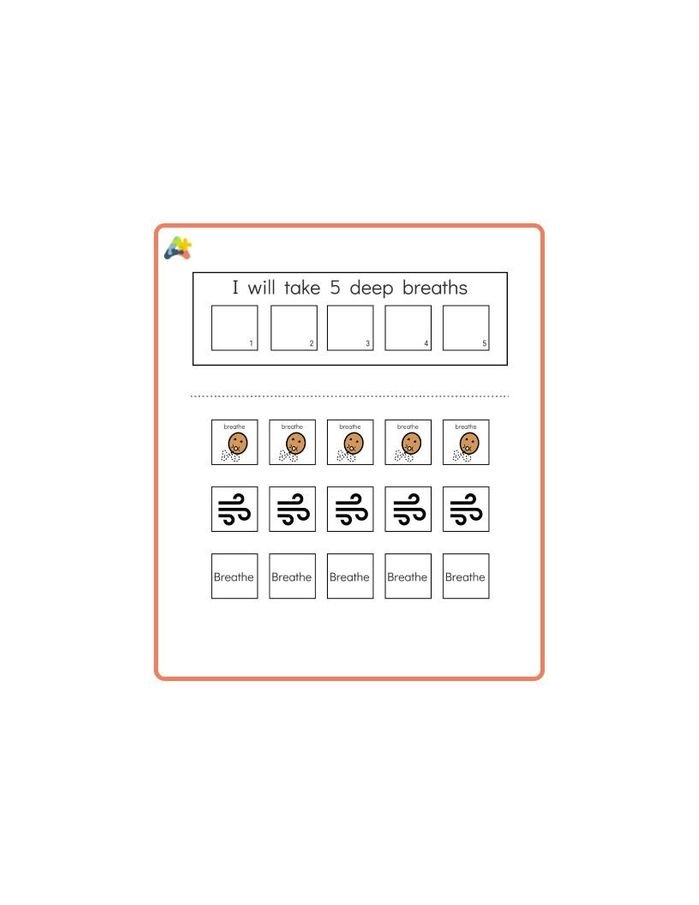
This 5 Deep Breath visual helps develop, support, and strengthen learner's social-emotional development by encouraging them to practice deep breaths when feeling upset, anxious, or sad.
5 Deep Breaths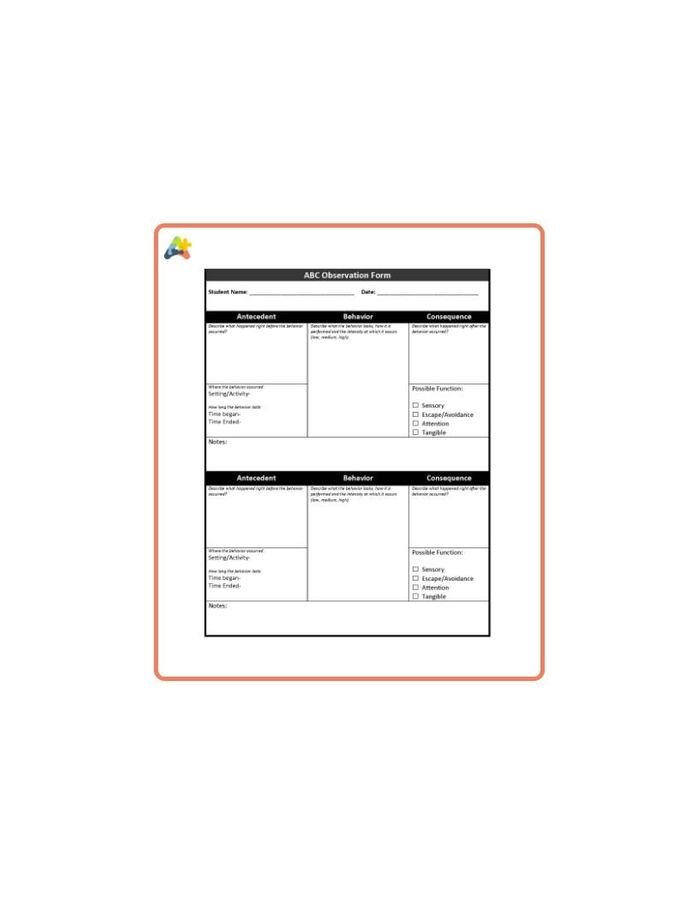
The ABC observation form is a structured tool used to record and analyze the three key components of analyzing a target behavior. Antecedents (A) are the events or conditions that occur immediately before the behavior. Behavior (B) is the observable and measurable action performed by the student. Consequences (C) are what happen right after the behavior occurs, and how the staff responds.
ABC Observation Form Page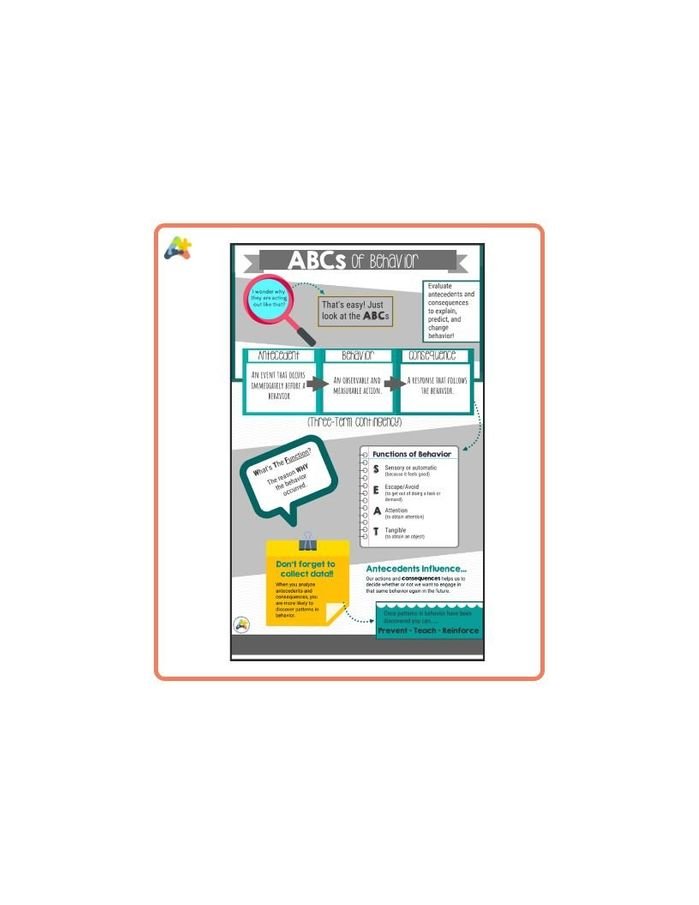
Describes the antecedent, behavior and consequence when looking at behavior.
ABCs of Behavior Page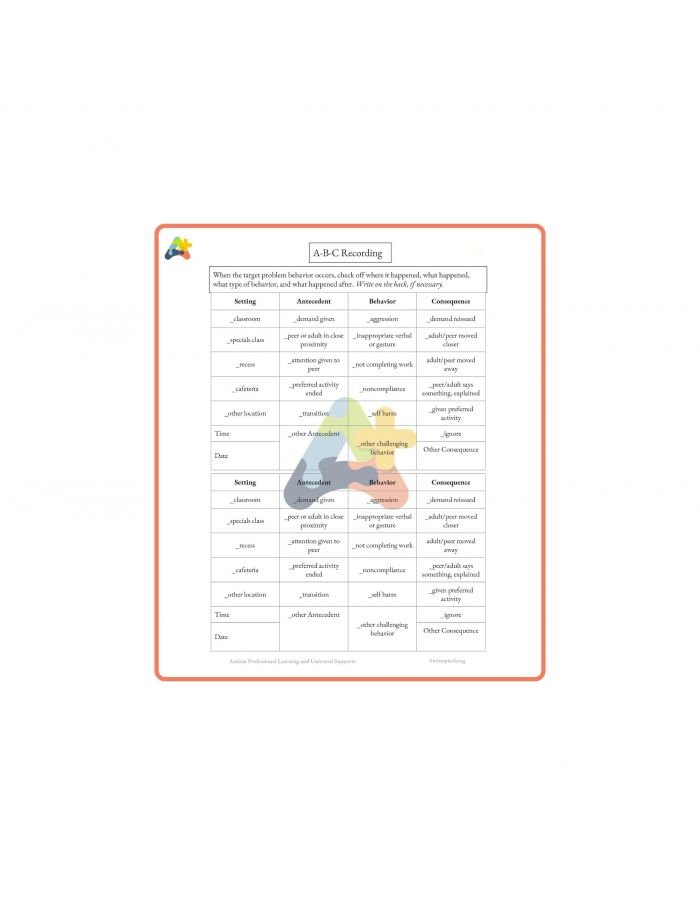
ABC Data Recording is keeping track of what happens before, during, and after a behavior of interest or target behavior. It is also known as the three-term contingency. ABC stands for A, antecedent (what happens before the behavior); B, behavior; and C, consequence (what happens right after the behavior).
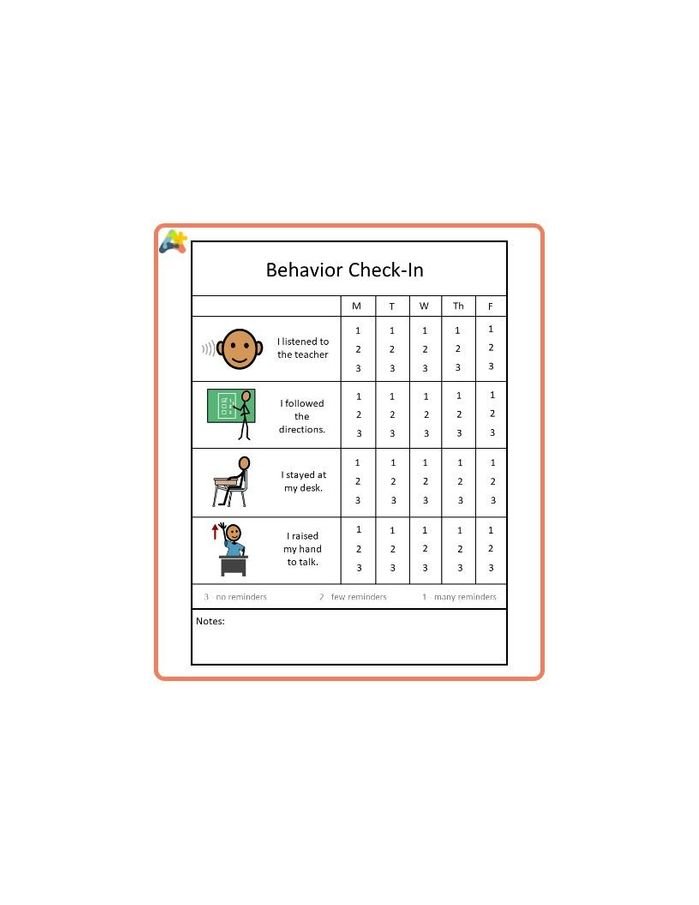
A behavior check-in quickly assesses and records the target behavior of the student at the end of a given task, timeframe (partial or full day), or class period.
Behavior Check-In/Check-Out Page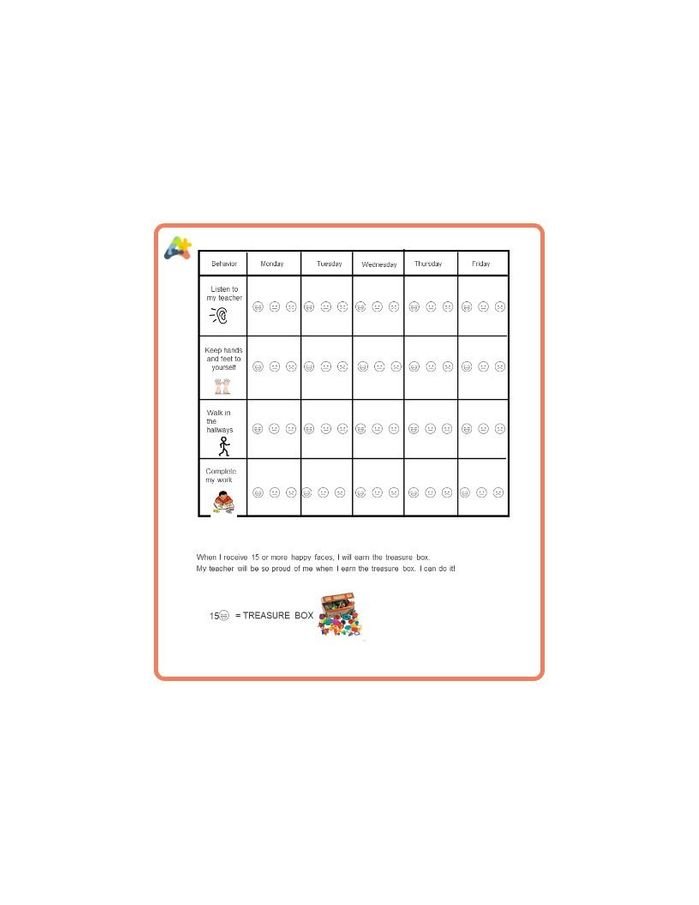
A behavior check-in quickly assesses and records the target behavior of the student at the end of a given task, time frame (partial or full day), or class period.
Behavior Chart (Small Smiles) Page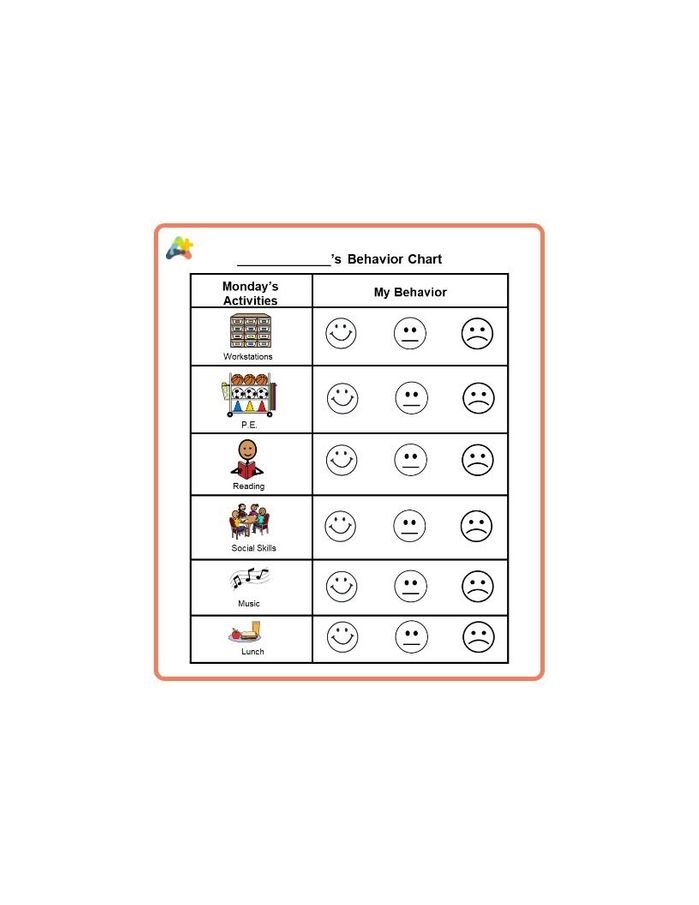
A behavior check-in quickly assesses and records the target behavior of the student at the end of a given task, time frame (partial or full day), or class period.
Behavior Check-In (Smiley Faces) Page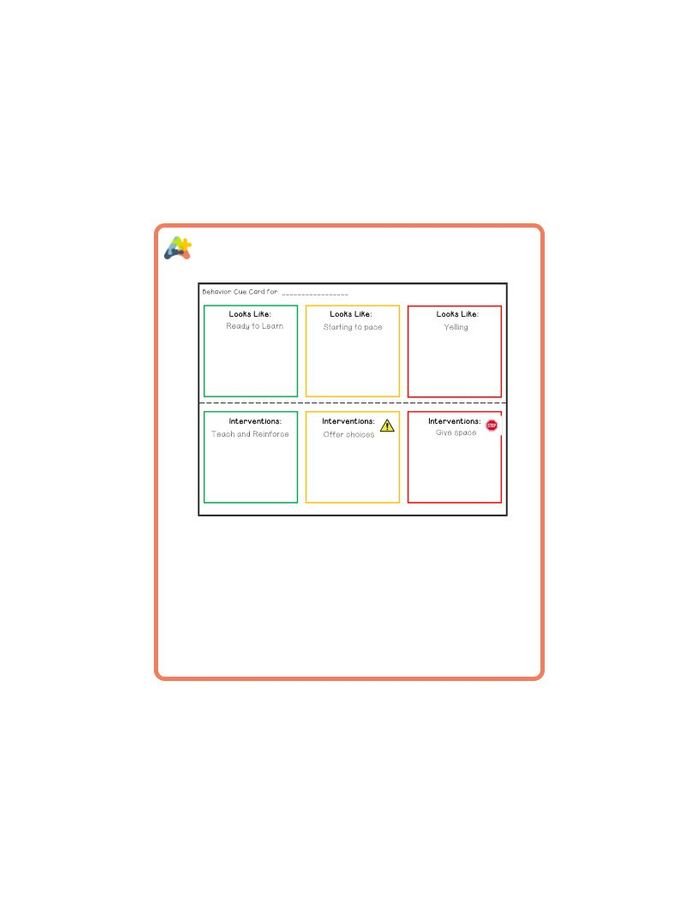
Behavior Cue Cards are designed to help staff know how to respond to learners depending on the learner's current zone.
Behavior Cue Card Page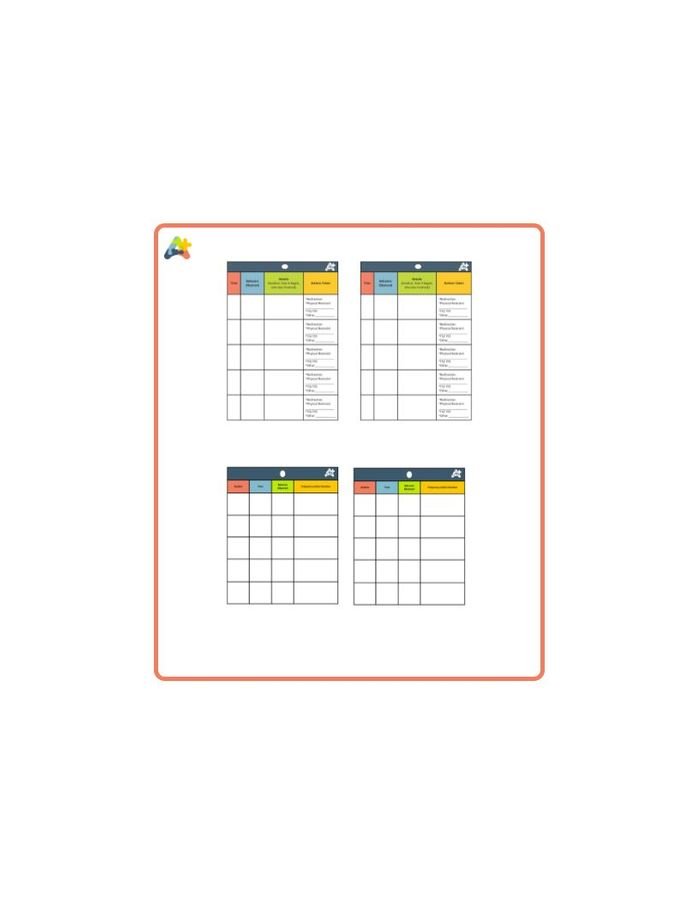
The Behavior Lanyard Data Sheet is a quick, on-the-go tool designed for staff to document student behavior in real time. Because it is compact and easy to carry, it allows teachers, paraprofessionals, and support staff to capture key information immediately as behaviors occur. This helps ensure more accurate data collection and supports timely decision-making.
Behavior Data Lanyard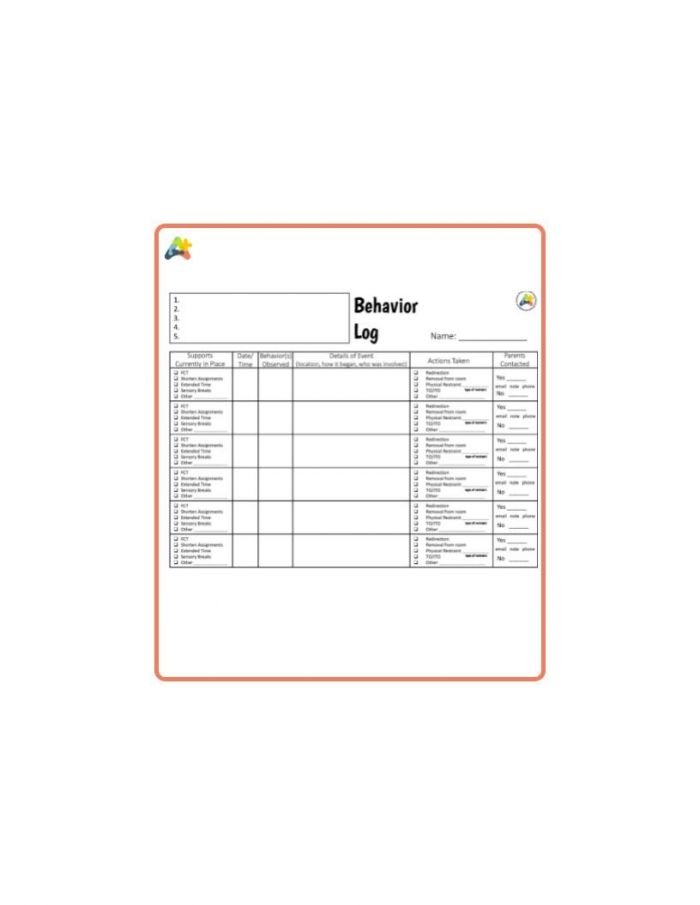
The Behavior Log os a tool used to document learner behavior incidents as they occur. It helps staff capture what happened, the context in which it occurred, and how the staff responded to the behavior. This information helps support data-based decision making, identify behavior patterns, and informs interventions, IEP goals, or behavior plans.
Behavior Log Page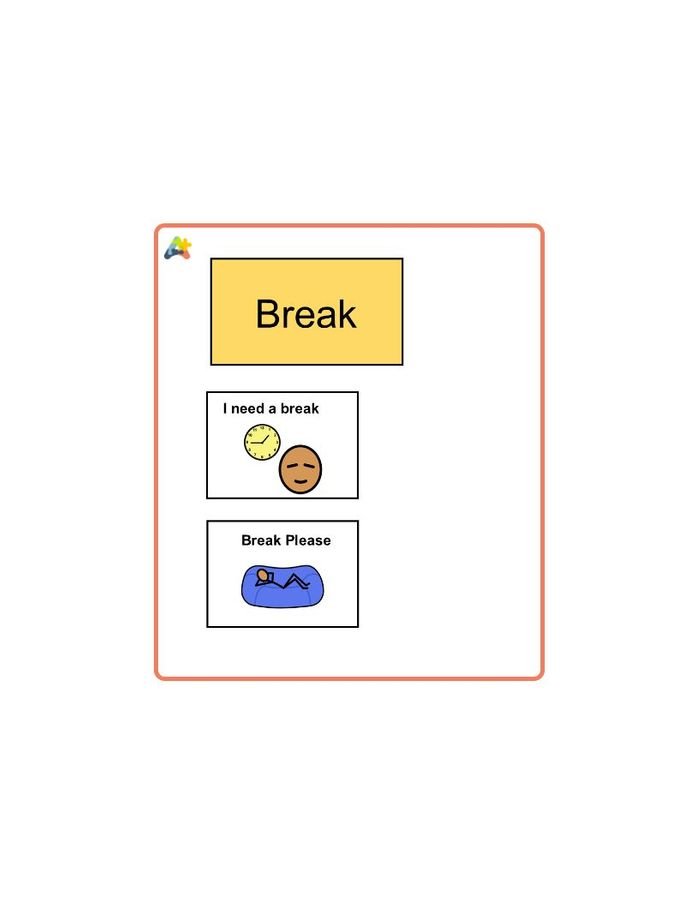
Break cards act as the learner's voice in the moment to request a break instead of engaging in a challenging behavior to escape a task or avoid an activity. Break cards are a great tool for functional communication.
Break Cards Page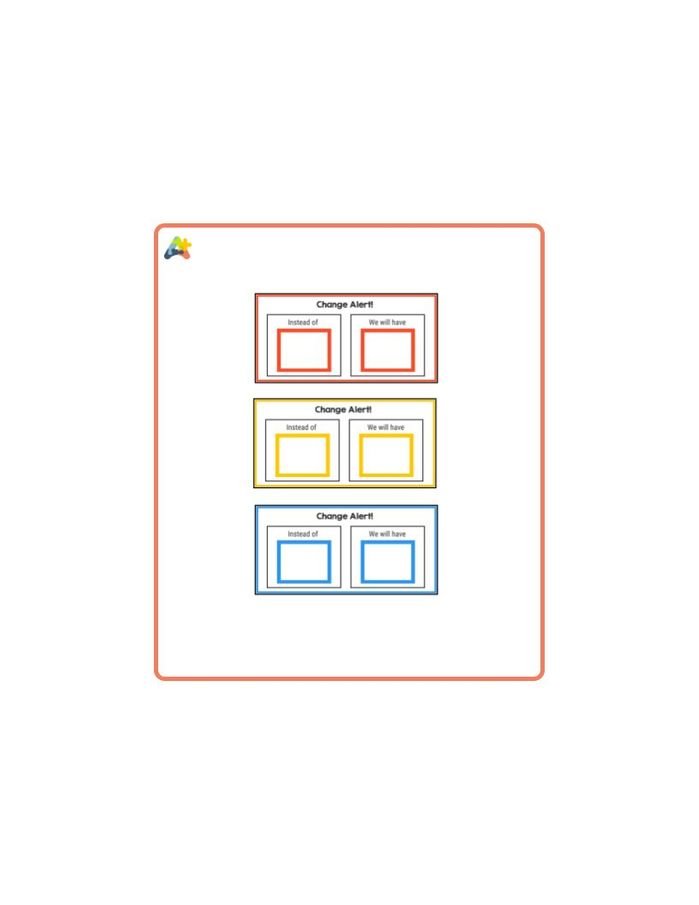
This resource is used for change in a learner’s schedule. It visually shows them of the change and can help with a smoother transition.
Change Alert Page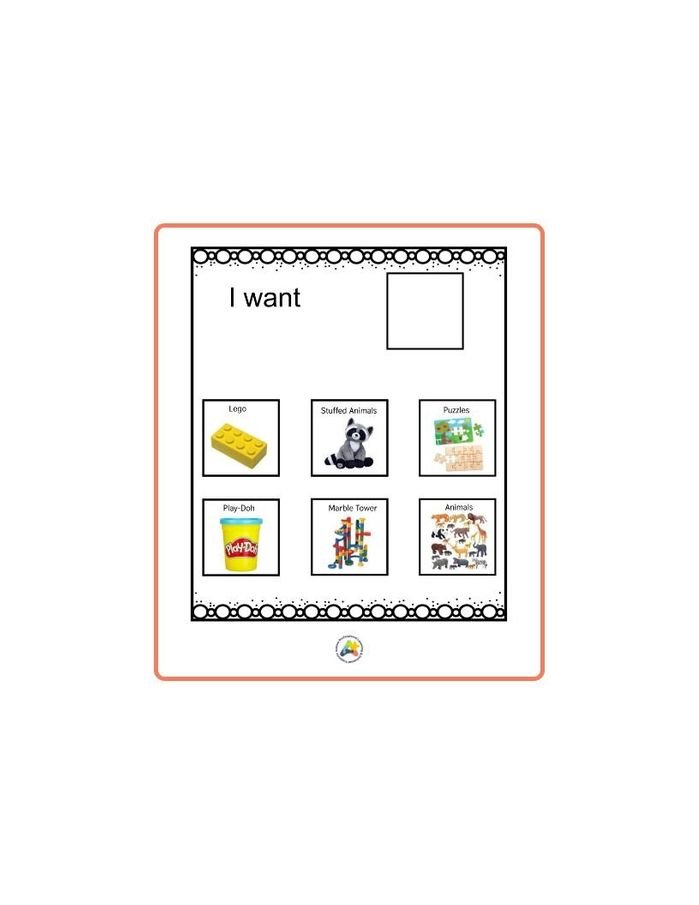
A choice board visually shows learners options for different situations. this is an "I want" board with a selection of 6 activity choices.
Choice Board- Activity Choices Page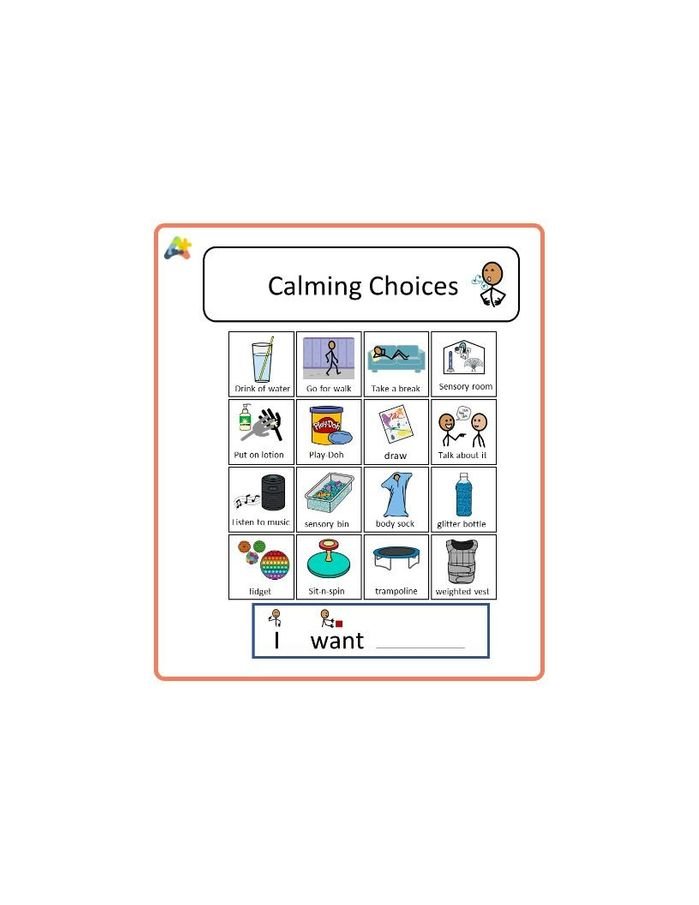
A choice board visually shows learners options for different situations. A calming choice board would offer a variety of calming techniques for the learner to use during times they need to de-escalalte and regulate their bodies
Choice Board - Calming Page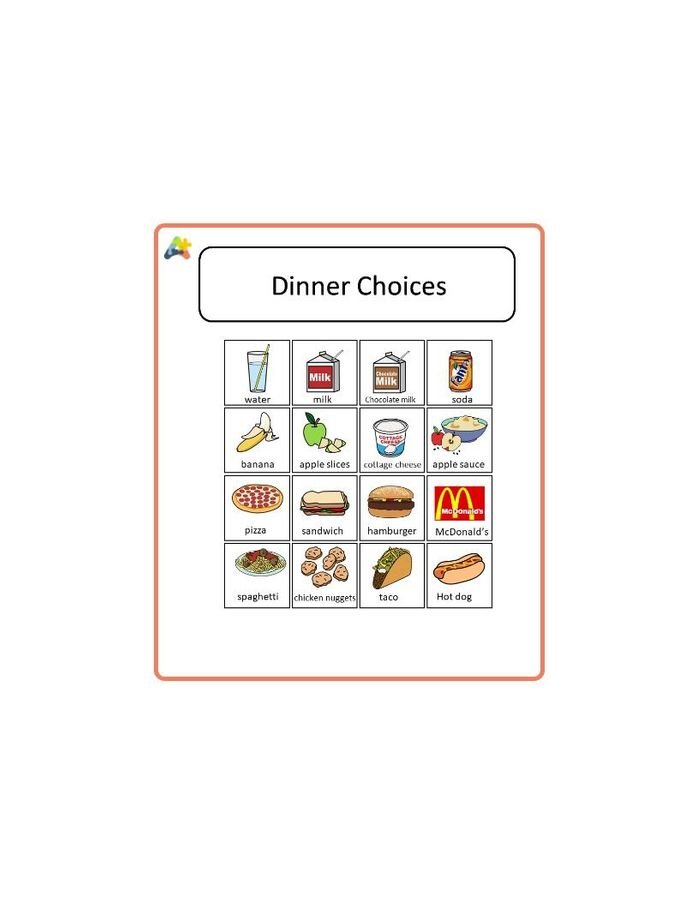
A choice board visually shows learners options for different situations. This one is for dinner.
Choice Board - Dinner Page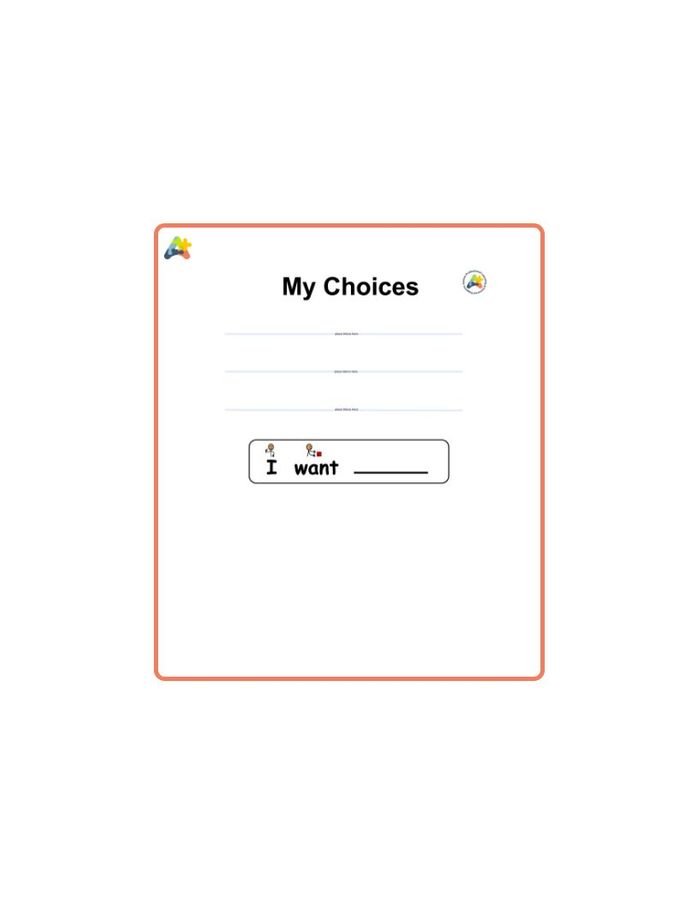
This choice board can be used for activities or food choices.
Choice Board - My Choices Page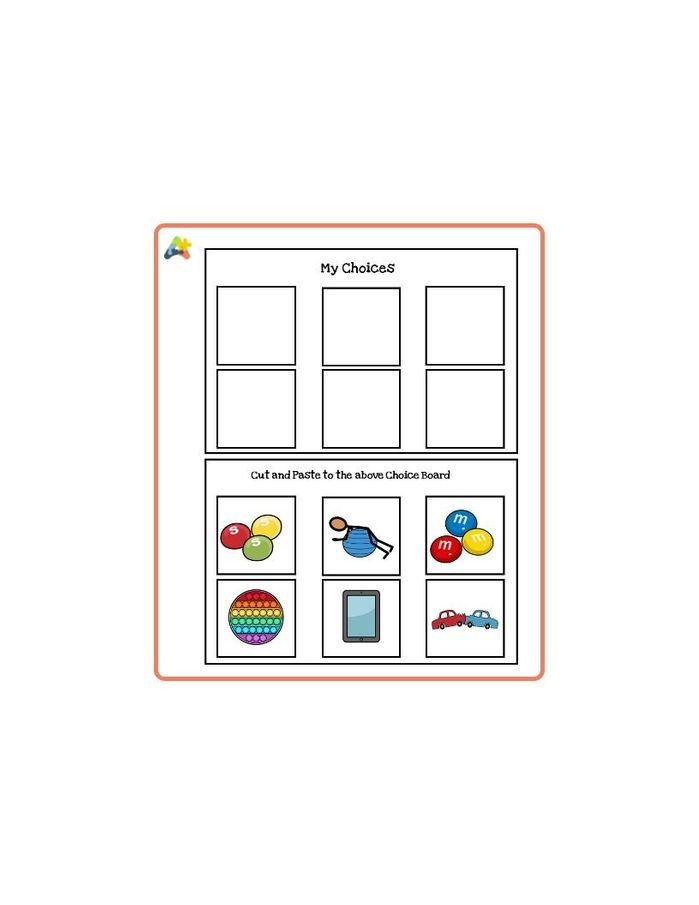
A choice board with 6 selection options. This board can also be used to show how many points each reinforcer is worth.
Choice Board - My Choices - 6 choices and points Page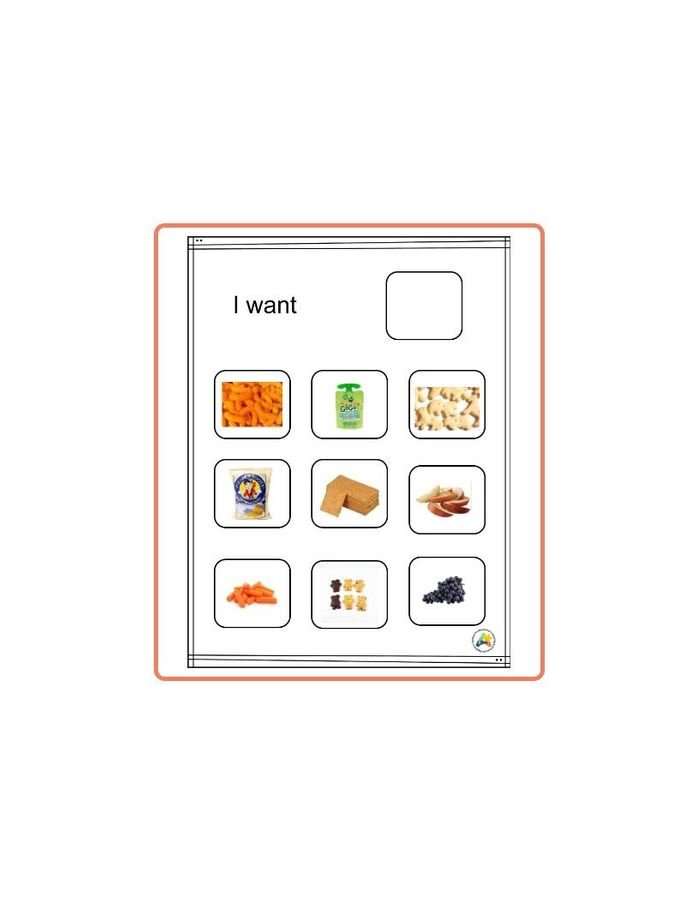
A choice board visually shows learners options for different situations. This is an "I want" board for snacks.
Choice Board - Snacks Page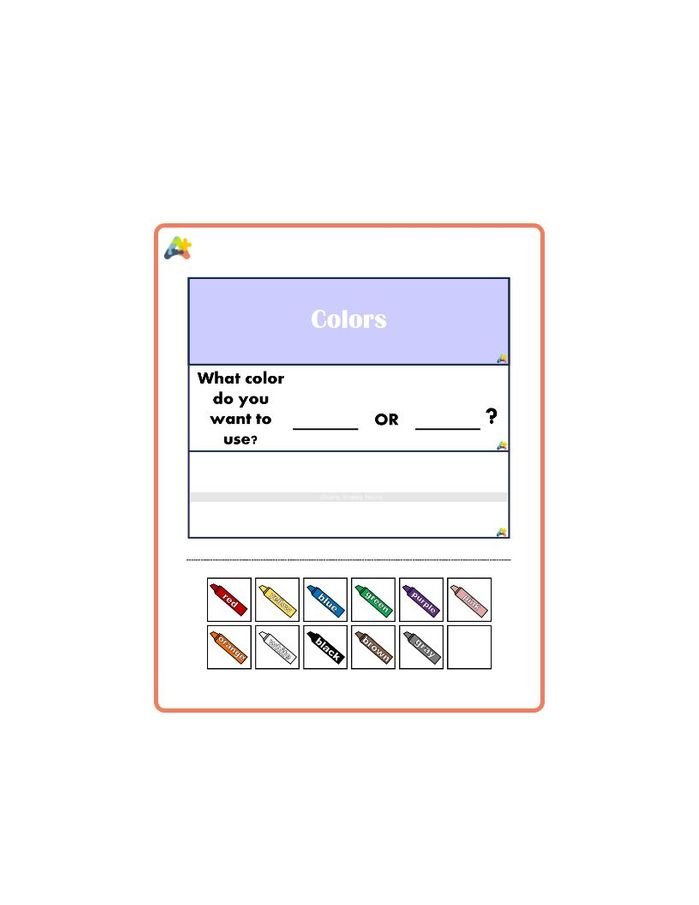
Offering learners choices throughout the day has been proven through research to help minimize interfering behaviors. When we offer our learners choices, it gives them control over their lives, decreasing the possibility of engaging in a power struggle.
Choice Making Strip Page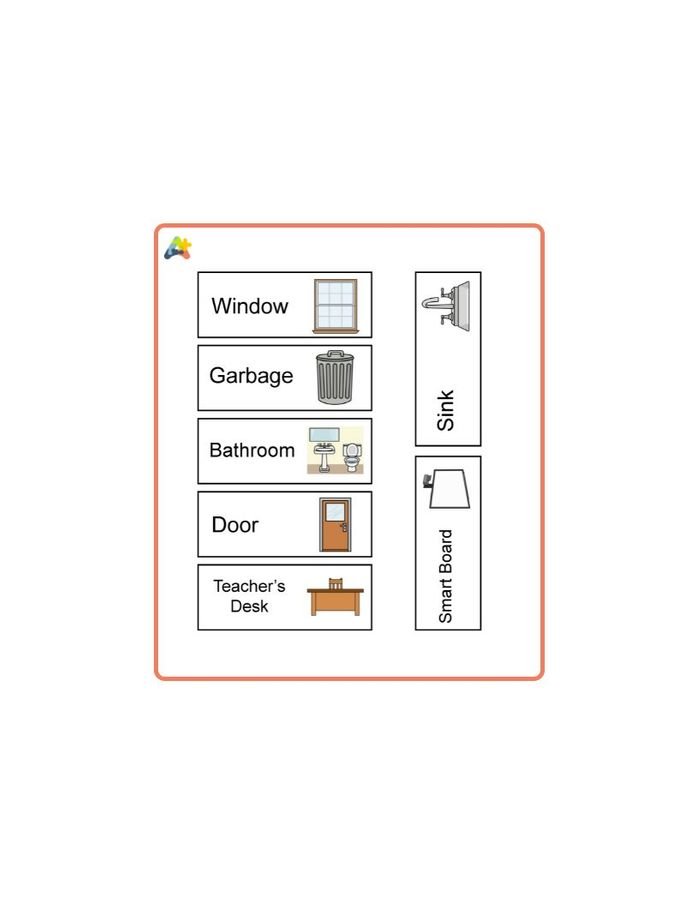
These visual supports teach the learner about their classroom environment. Labels can also assist with language development as well as literacy.
Classroom Labels Page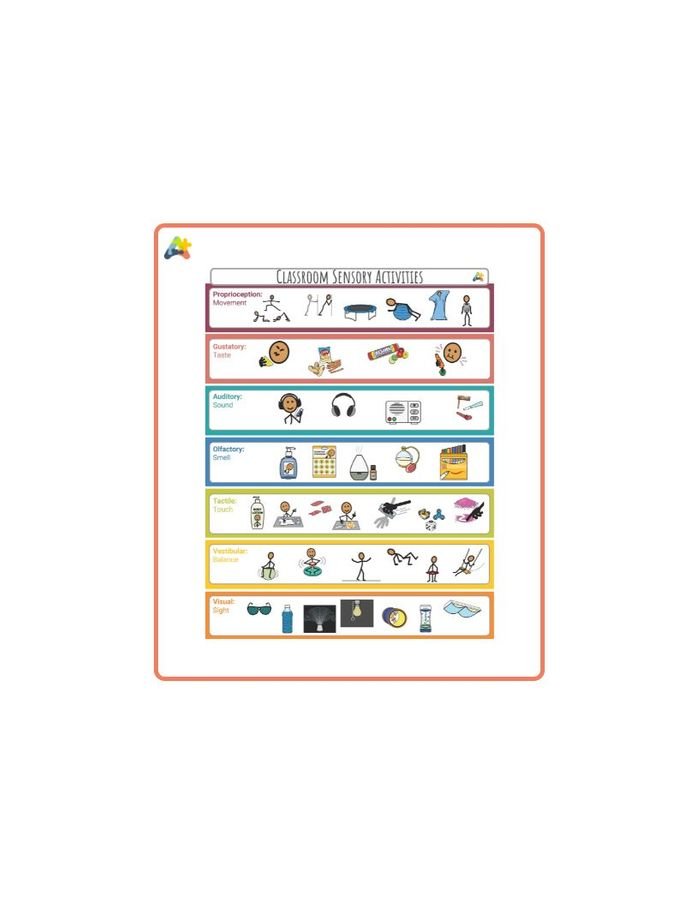
Shows different activities to calm and alert the sensory system.
Classroom Sensory Activities PDF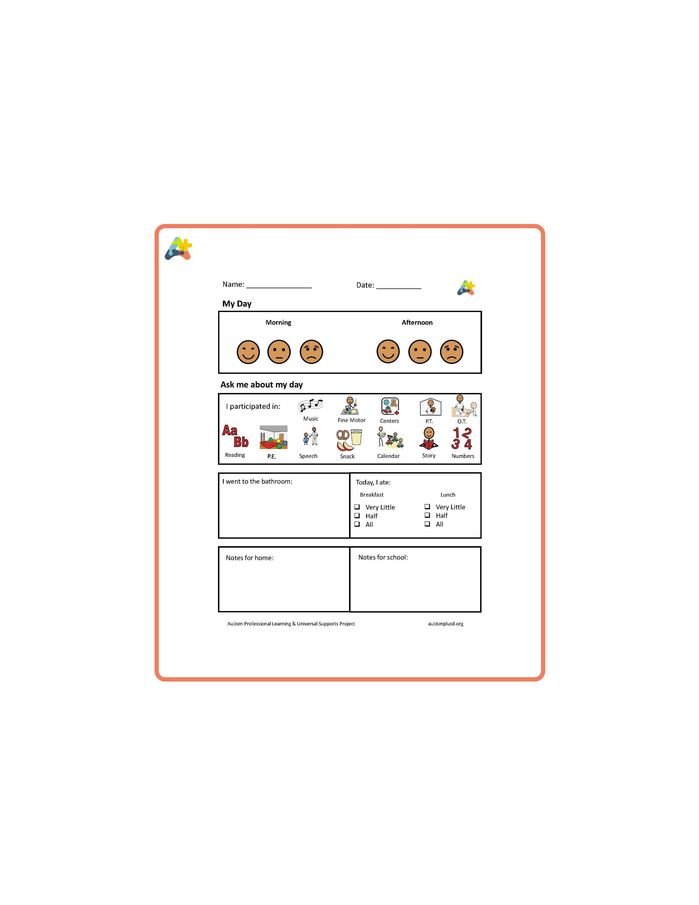
This note can be used for elementary students. It has visuals for each subject area and includes space for written notes to go home/school.
Communication -Ask Me About My Day (Elementary) Page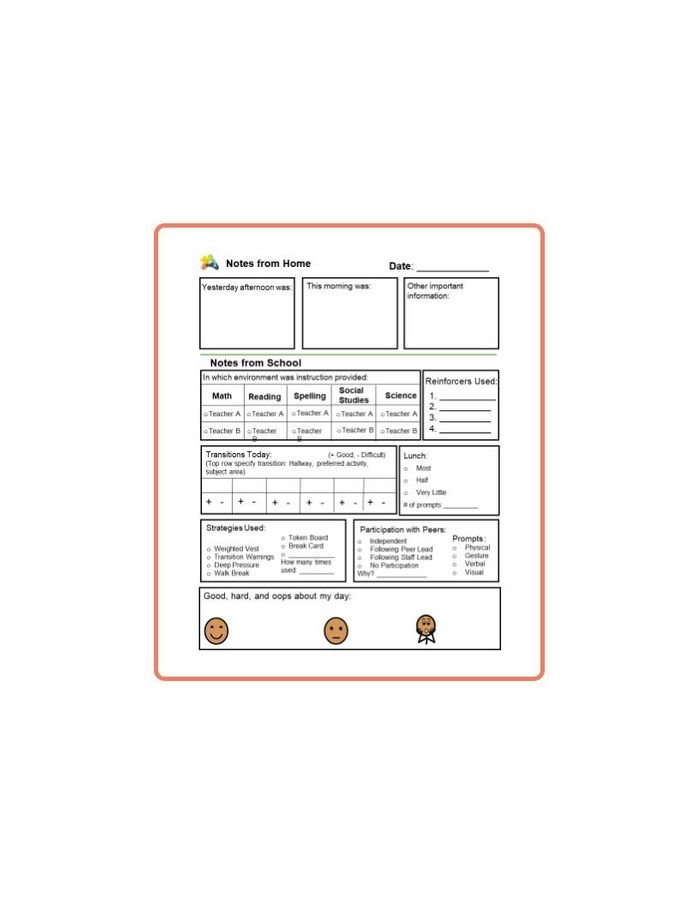
This note can be used for middle and high school students. It includes space for written messages for home/school. It also includes prompts used, reinforcers and strategies used.
Communication - Daily Communication Note Page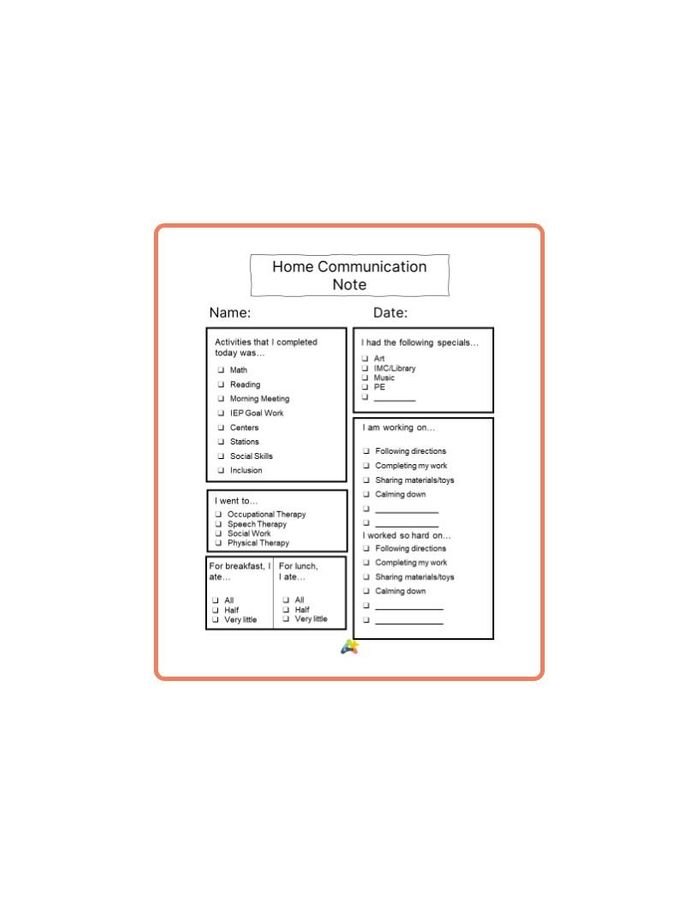
Quick checklist for home communication.
Communication - Daily Note (Checklist) PDF
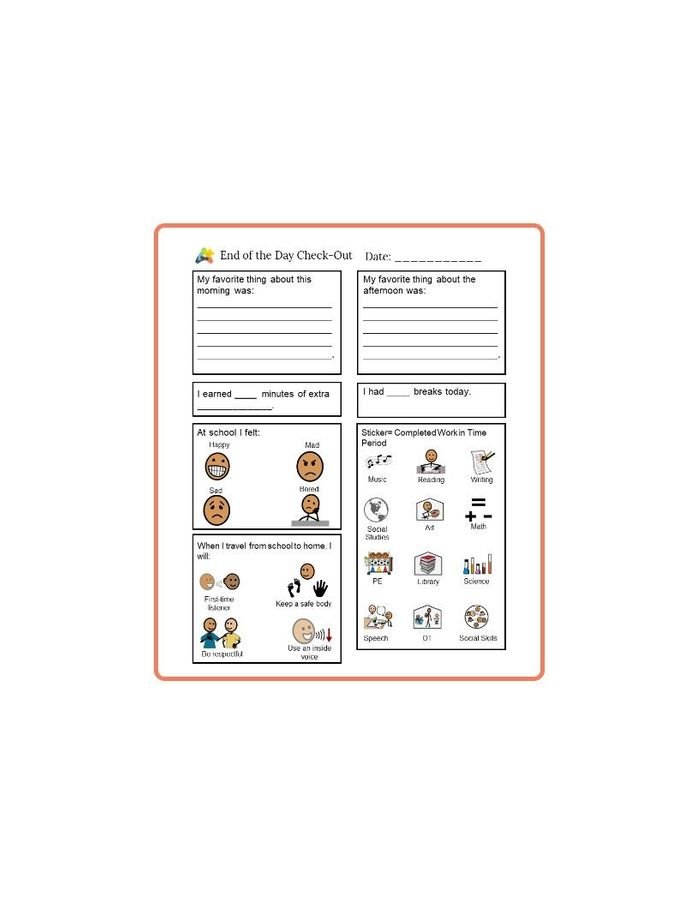
This note is for the learner to fill out at the end of the day. It also has reminders for bus expectations.
Communication - End of the Day Check Out with Visuals,... Page
Importance of communication between home/school.
This communication note is ideal for older students. It includes information about lunch, interactions, and reinforcers.
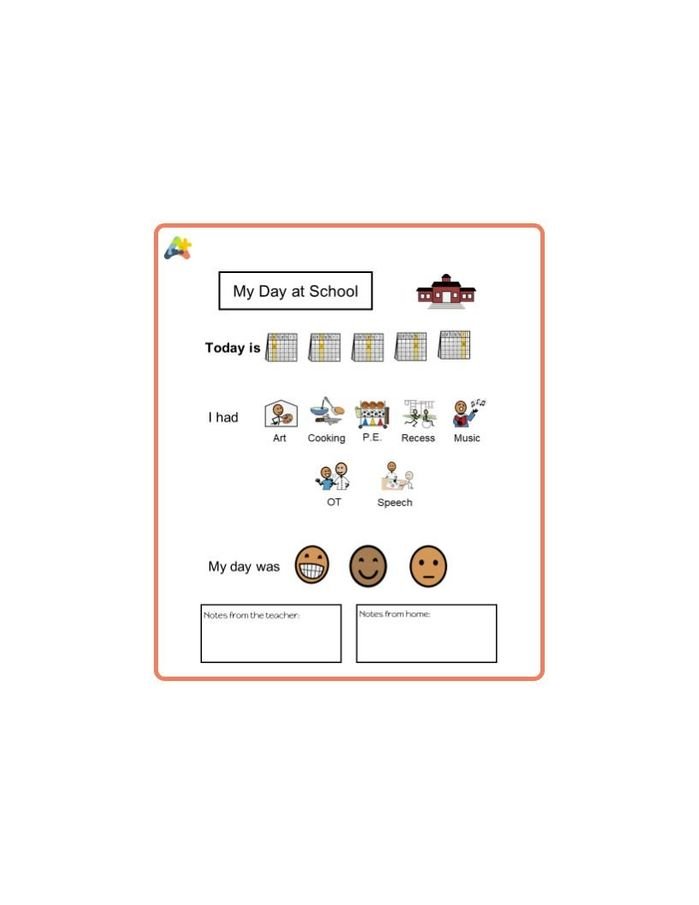
This note includes space for the learner to fill themselves as well as space for the teacher/parent to write a note.
Communication - My Day at School (visuals and short) Page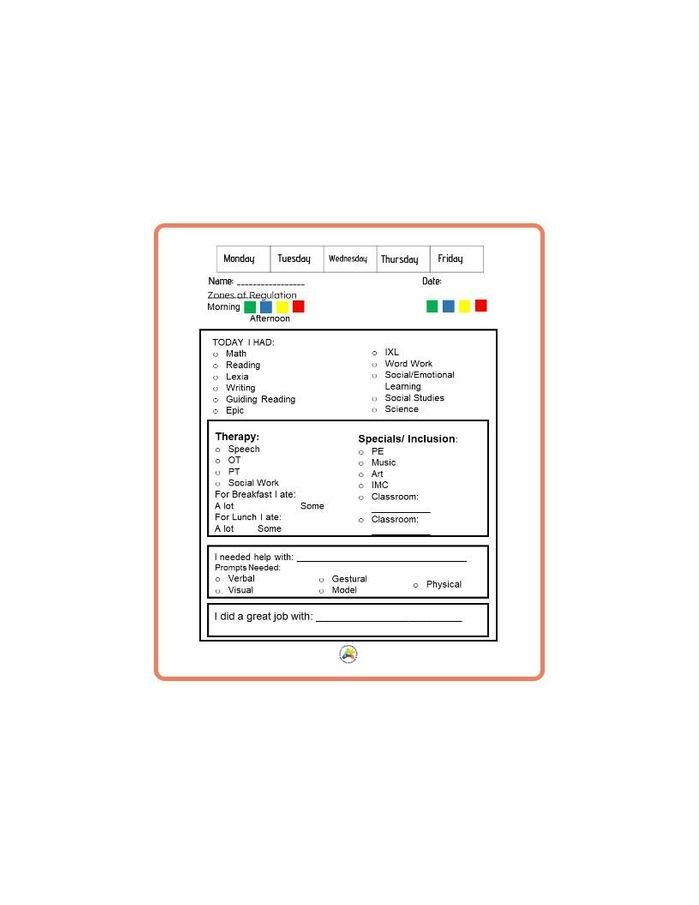
This note includes information on the learners day including zones of regulation.
Communication - Zones of Regulation Page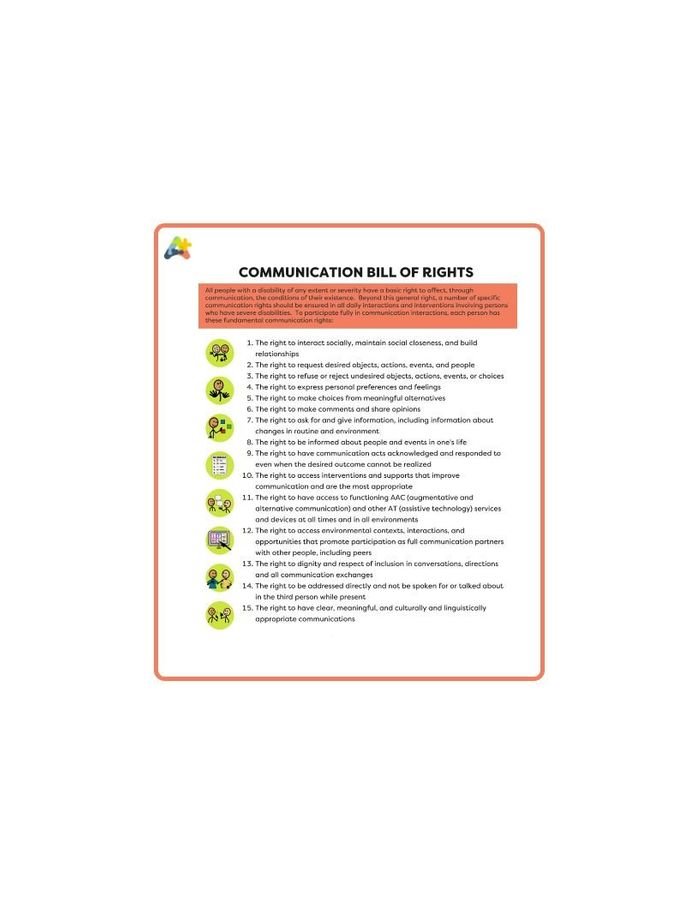
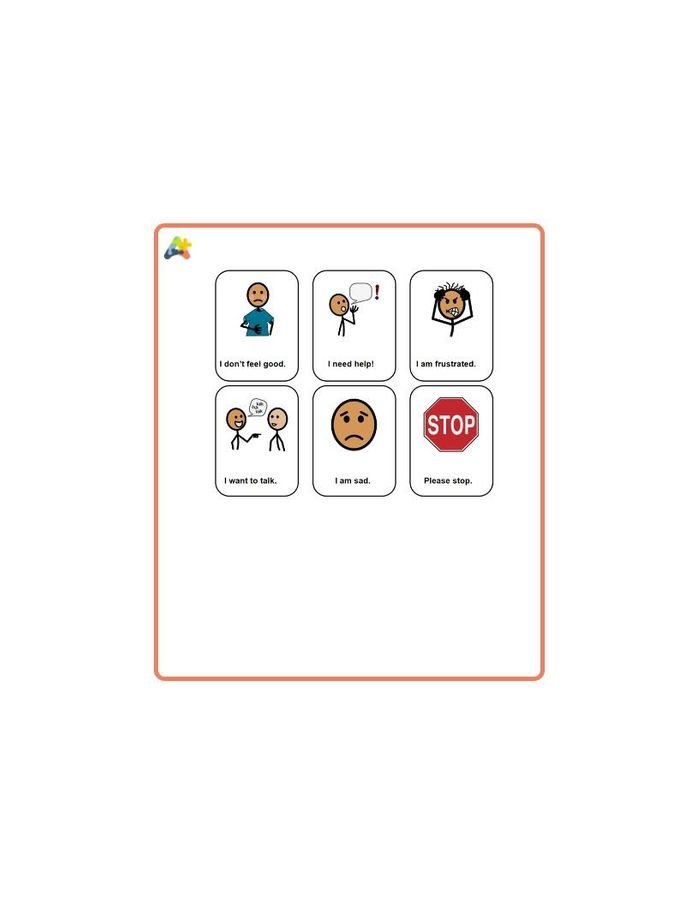
These visual communication cards are great to place on a student’s desk to help with initiation and communication needs and get their needs met.
Communication Cue Cards Page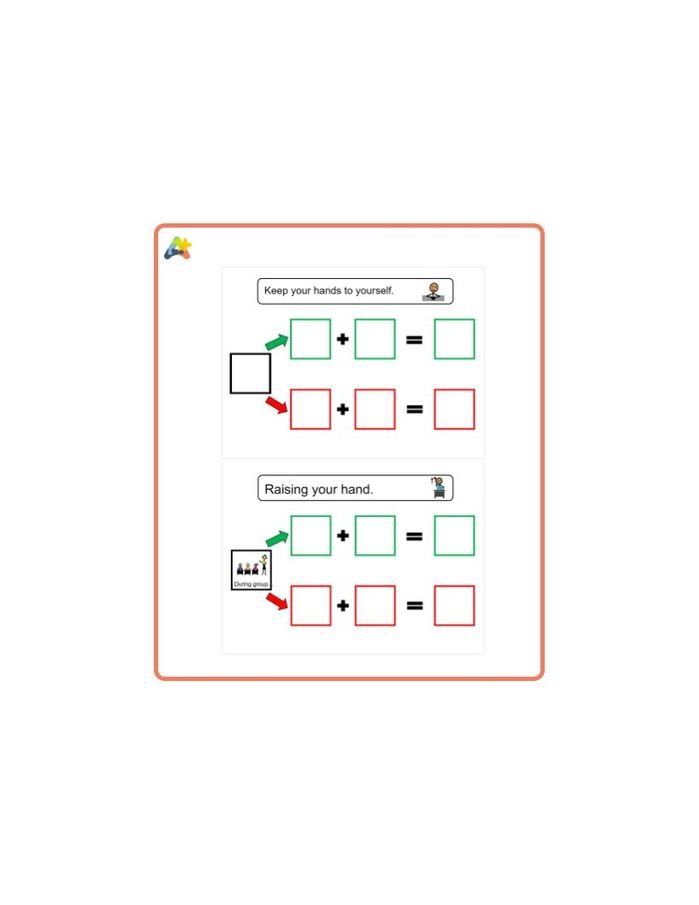
A visual used to identify expected behaviors that gain reinforcement rather than undesired behaviors.
Contingency Map (Includes multiple examples) PDF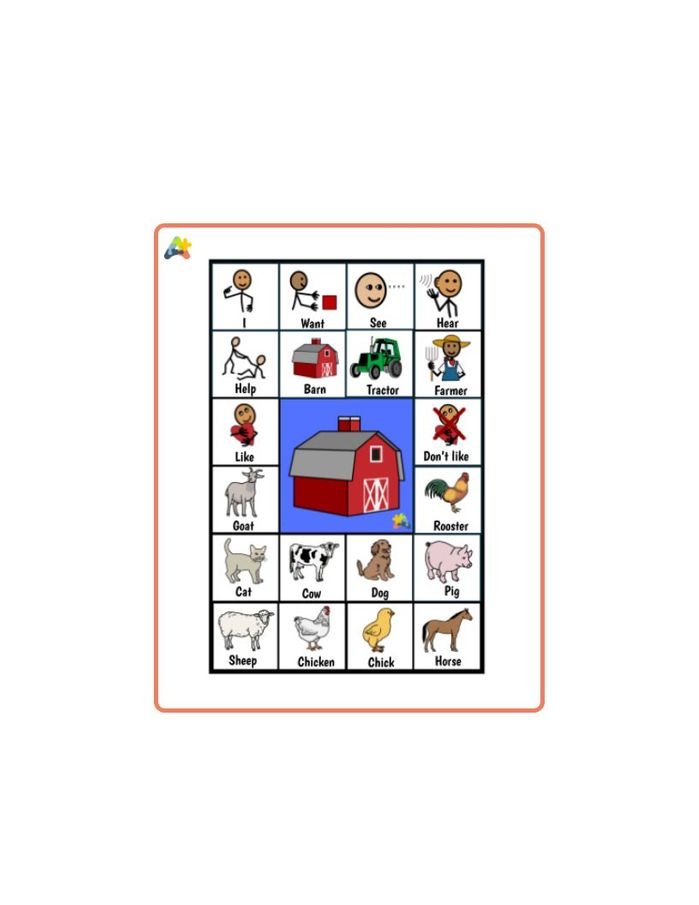
An item-specific communication core board is designed to support functional language use during a book or game. The board helps learners communicate wants, needs, actions, and comments while participating in play. Its use promotes expressive communication, engagement, and social interaction through the activity.
Core Board - Activity Specific - Farm Page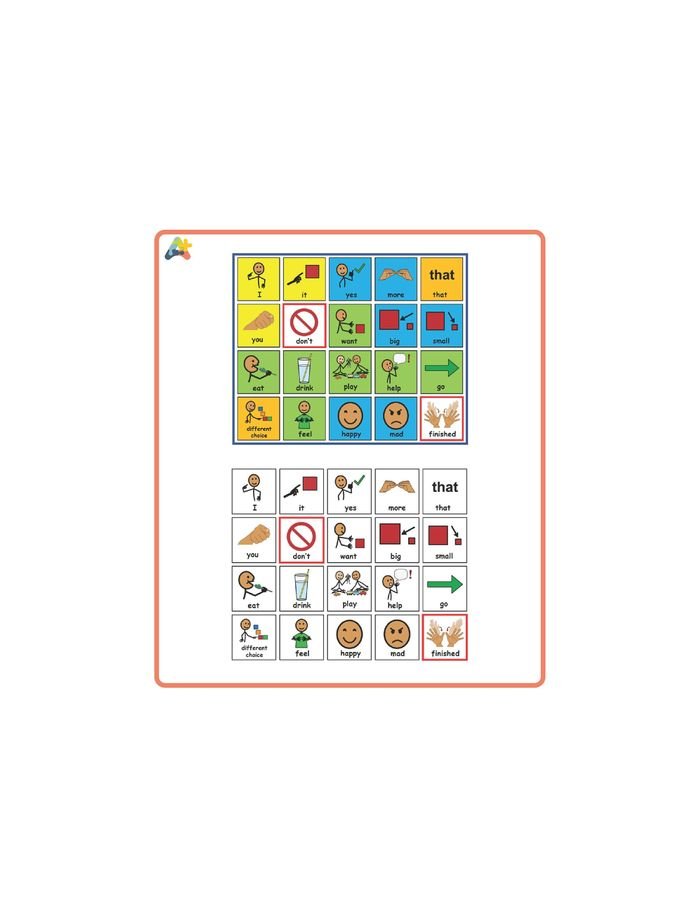
A Core Board is an alternative method of communication, typically used with learners who have little to no verbal communication, with symbols that are fixed in one place. The words/symbols used on the board are high-frequency words, such as like, want, go, more, help, etc. that can be used across many settings. The Core Board can have as few or as many symbols depending on the learner's language skills.
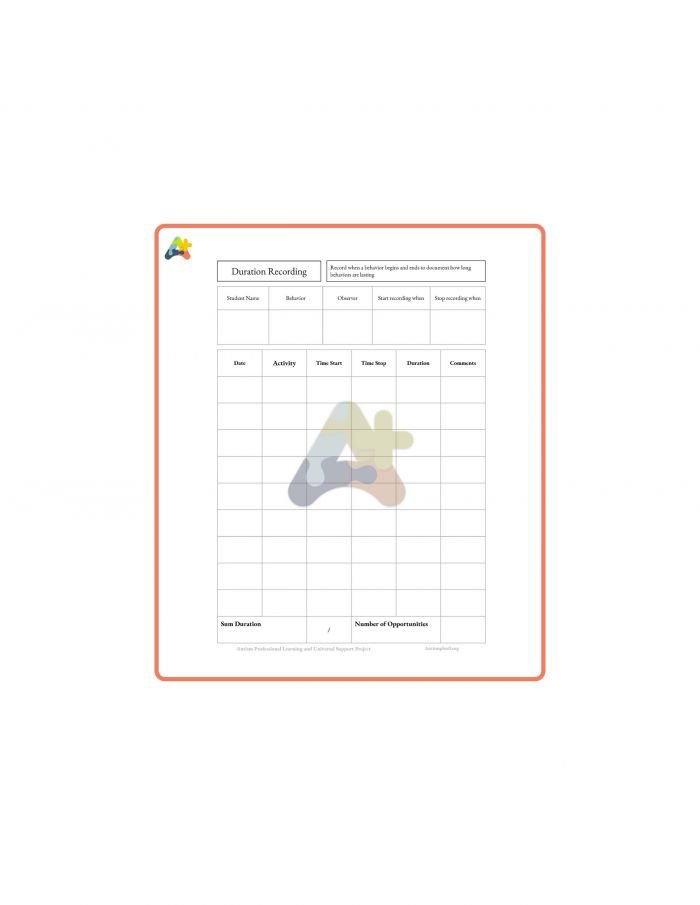
Duration recording documents display how long a learner engages in a target behavior. This type of data collection is appropriate for target behaviors that have a clear beginning and ending or occur at very high rates.
Duration Recording Data Sheet Page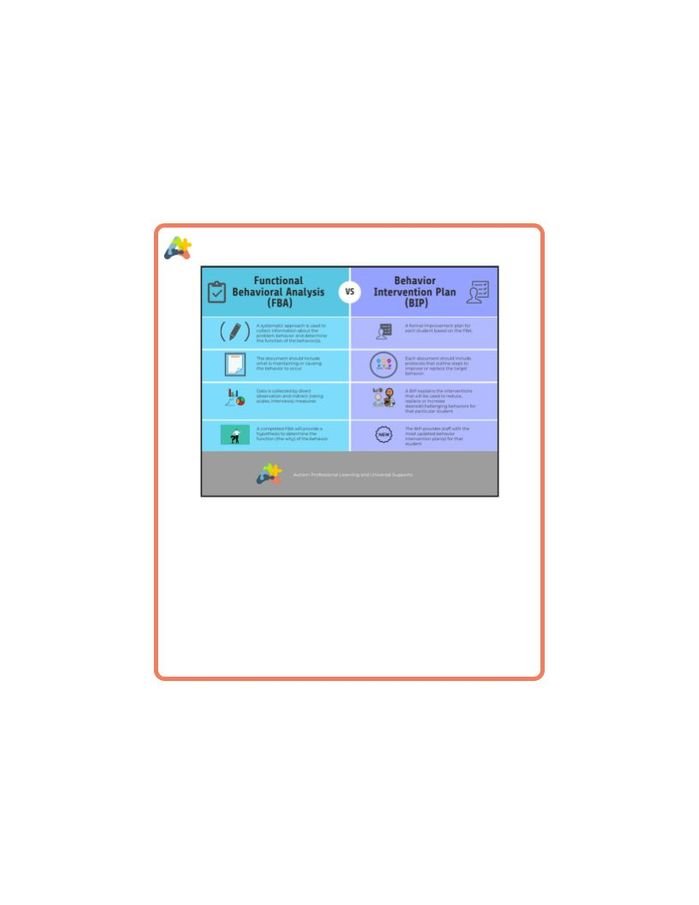
Poster describing the difference between a Functional Behavioral Assessment (FBA) and a Behavior Intervention Plan (BIP).
FBA Vs BIP PDF
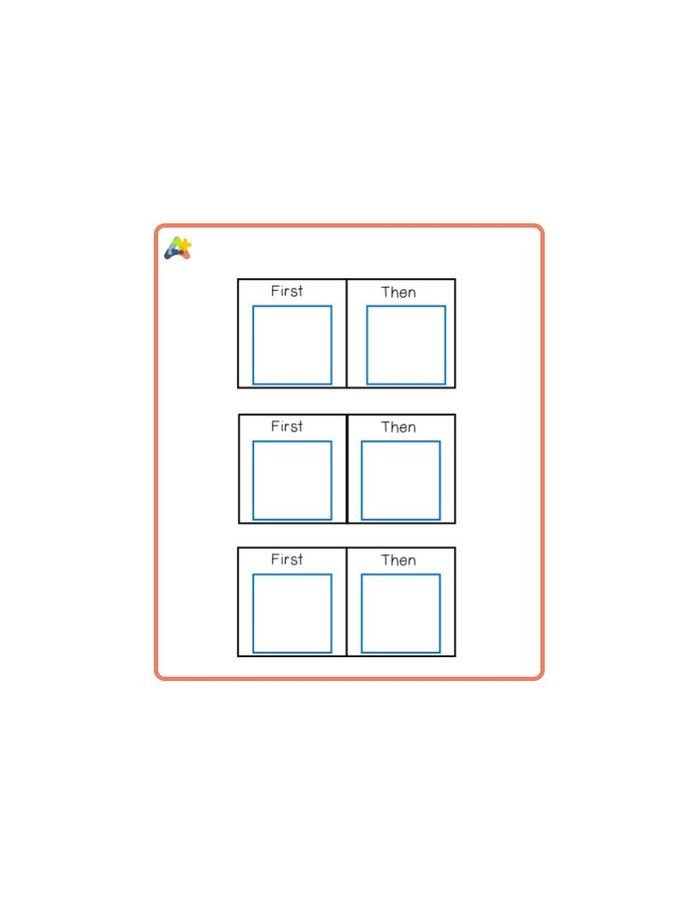
First-Then Board with blue border.
First - Then Boards (Blue Outline) PDF
Use this First-Then Board when students require objects to understand communication.
First - Then Boards (Objects) PDF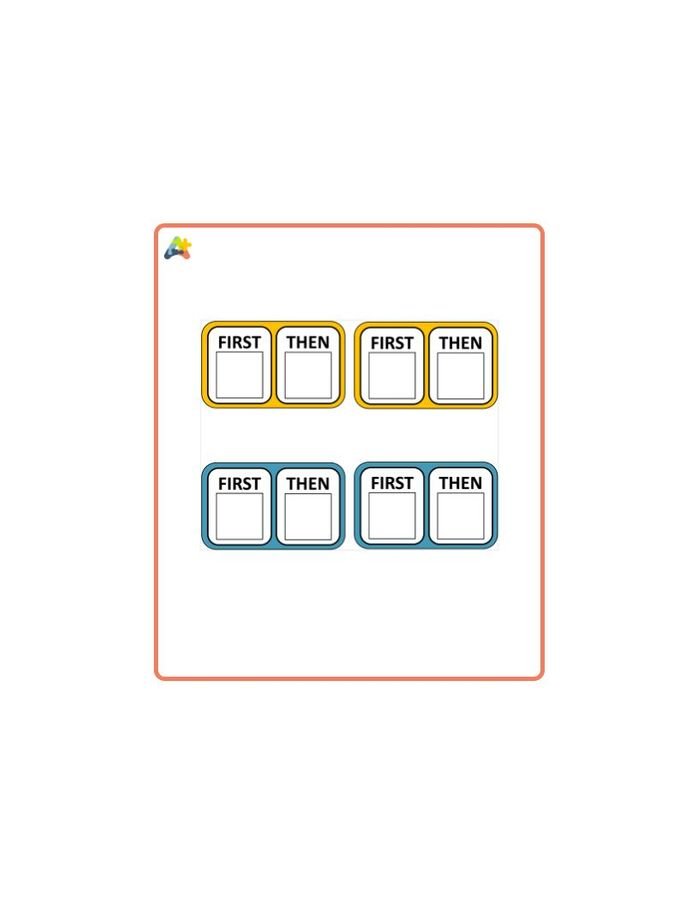
First-Then Board with a yellow or blue background.
First - Then Boards (Yellow/Blue Outline) PDF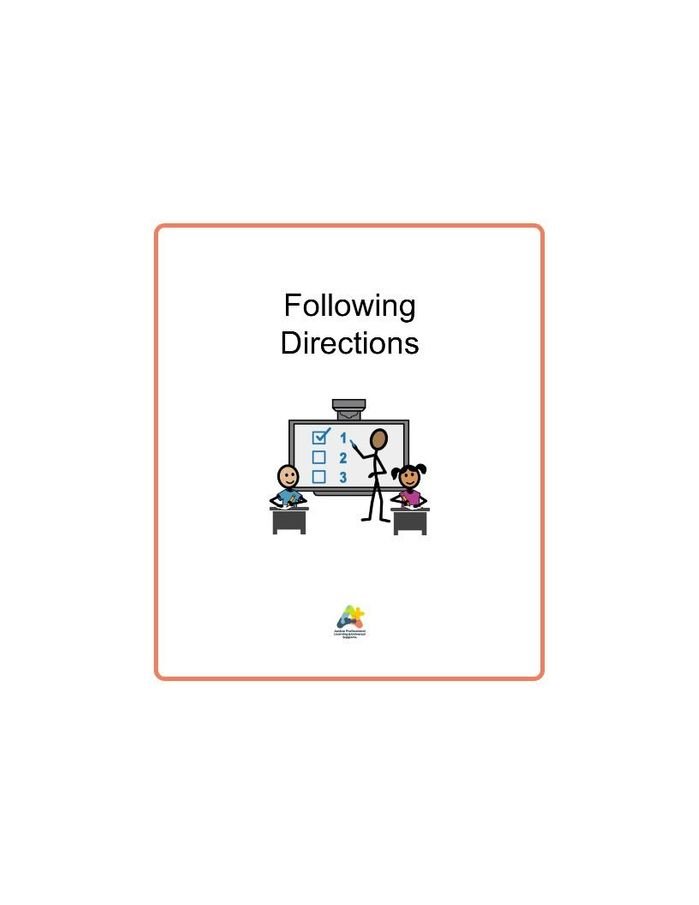
This social narrative visually displays why following teacher directions while at school is essential. It is socially appropriate to follow directions, and the pictures give the learner better comprehension, as many students are visual learners.
Following Directions Page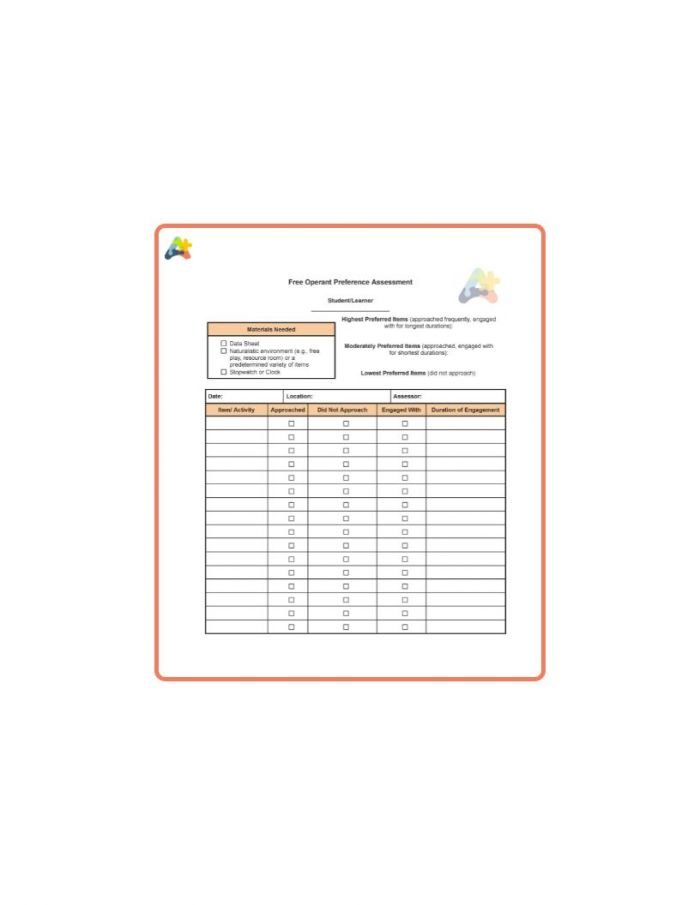
Preference assessments are evaluations that can be done through observations or a trial-based format to determine a hierarchy of items that a learner might prefer.
Free Operant Preference Assessment Page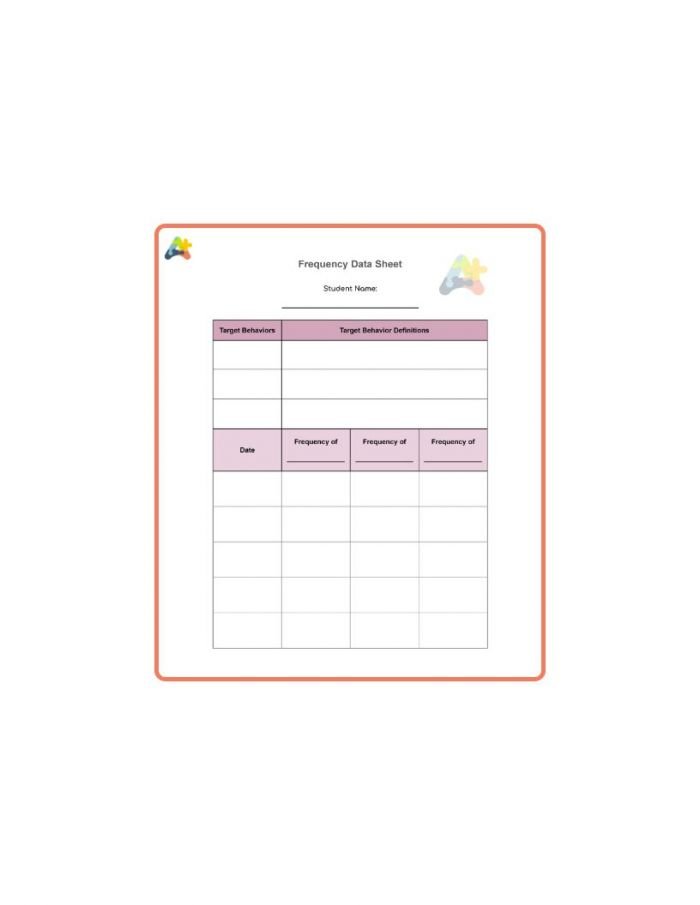
Frequency data tracking is a way to measure the number of times a behavior occurs within a given period.
Frequency Data Sheet Page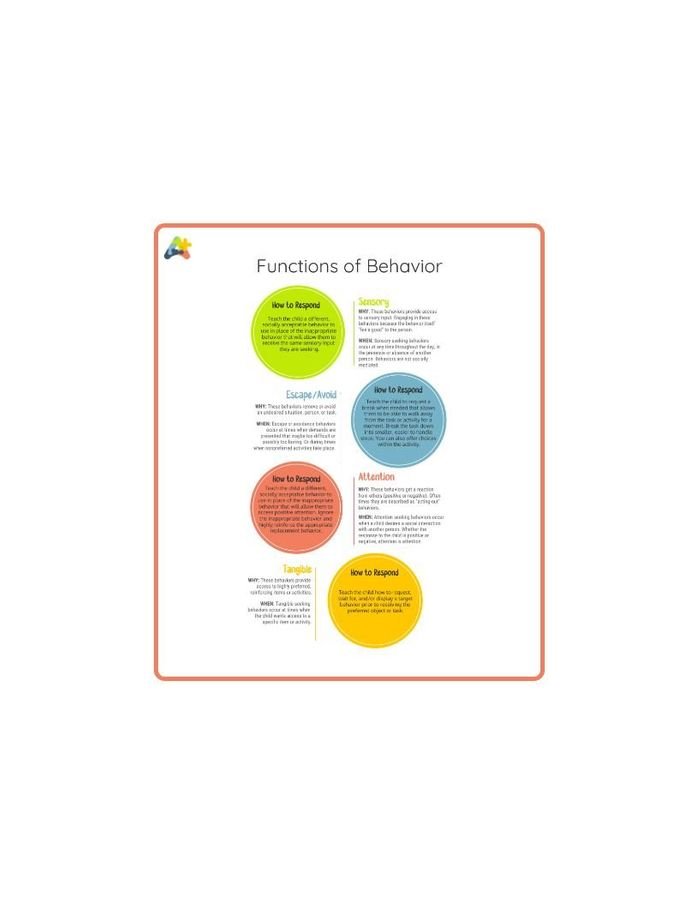
This document describes the four functions of behavior. This is a great resource to hang up in your classroom and have all staff read/become familiar with the functions of behavior.
Functions of Behavior PDF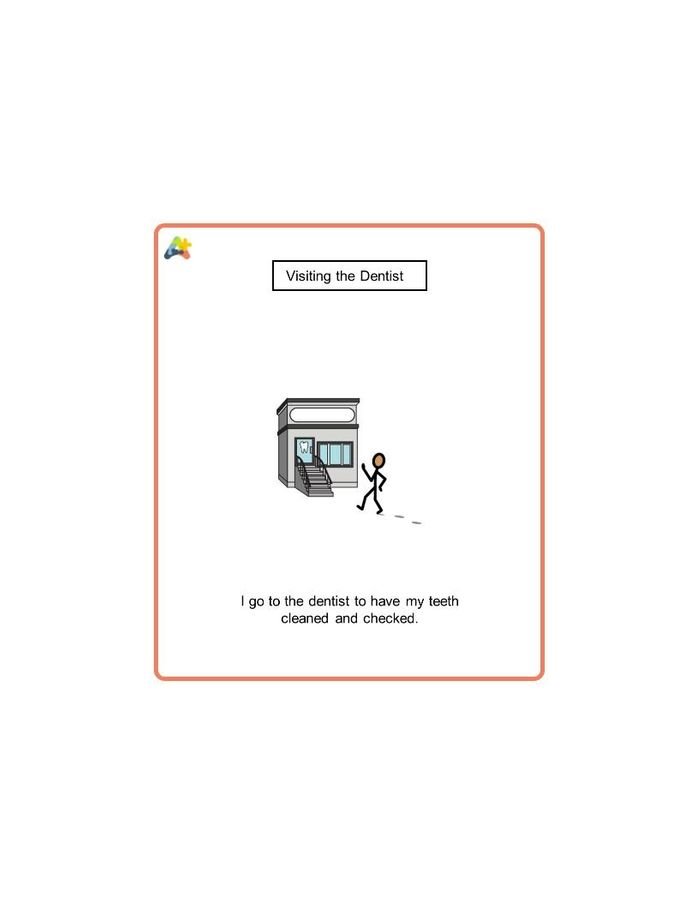
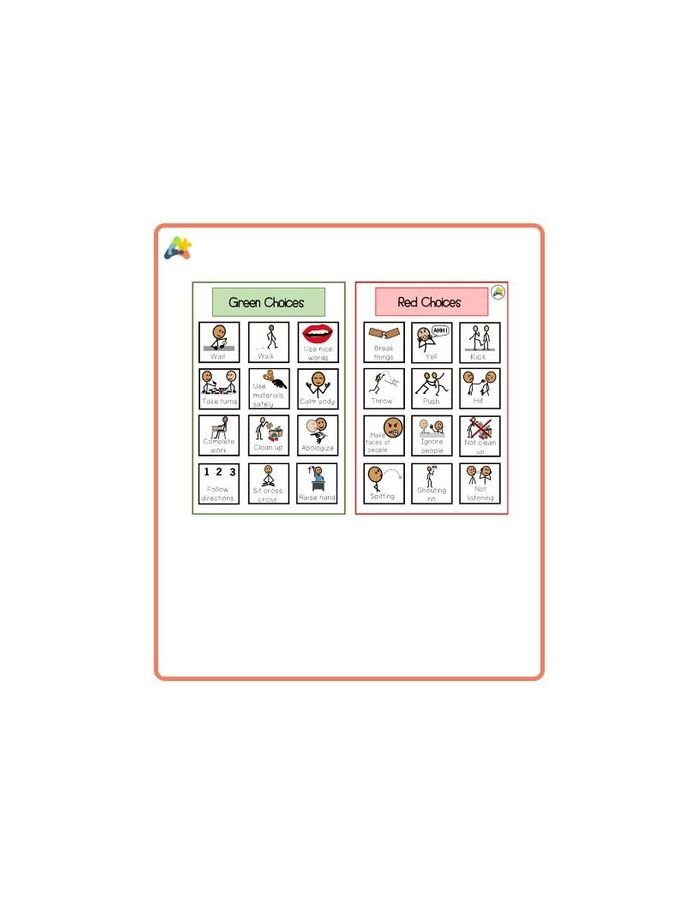
Green and red choices are used to describe behaviors. Green choices are positive, desired behaviors, whereas red choices are undesired behaviors.
Green and Red Choices Page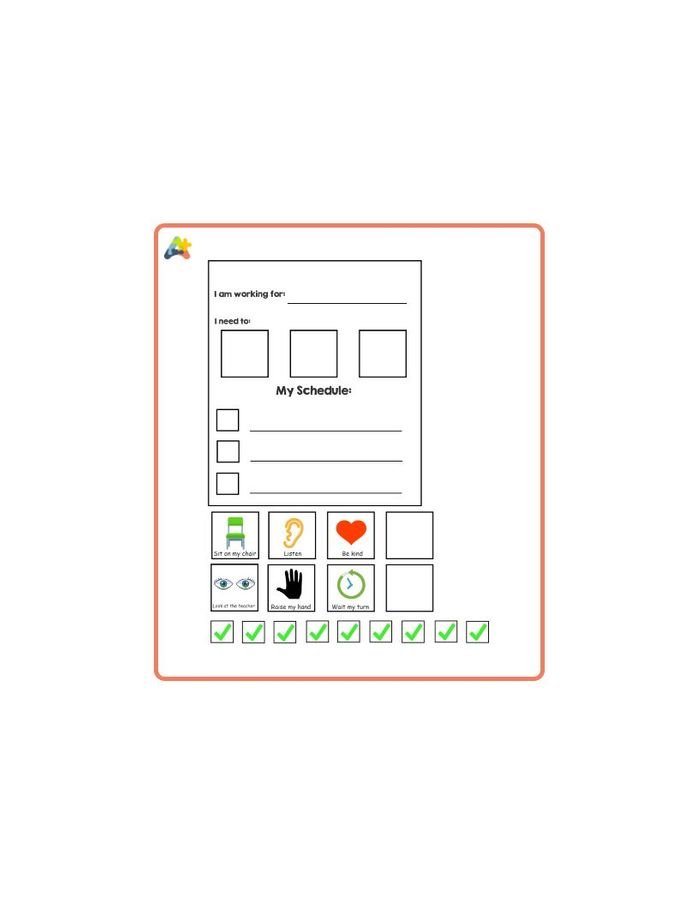
A token board is a behavior support system that reinforces positive behaviors by allowing learners to earn tokens, which are later exchanged for a preferred reinforcer. The board serves as a visual reminder of what the learner is working toward, how many tokens have been earned, and how many remain before accessing the reinforcer.
Hybrid Token Board/Schedule PDF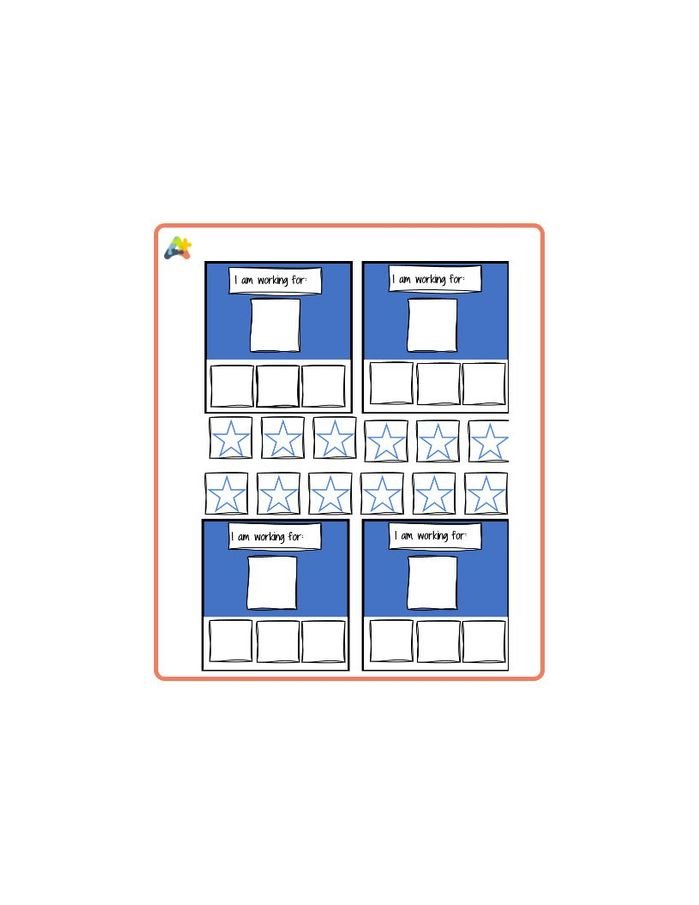
A token board is a behavior support system that reinforces positive behaviors by allowing learners to earn tokens, which are later exchanged for a preferred reinforcer. The board serves as a visual reminder of what the learner is working toward, how many tokens have been earned, and how many remain before accessing the reinforcer.
I Am Working For (3 stars)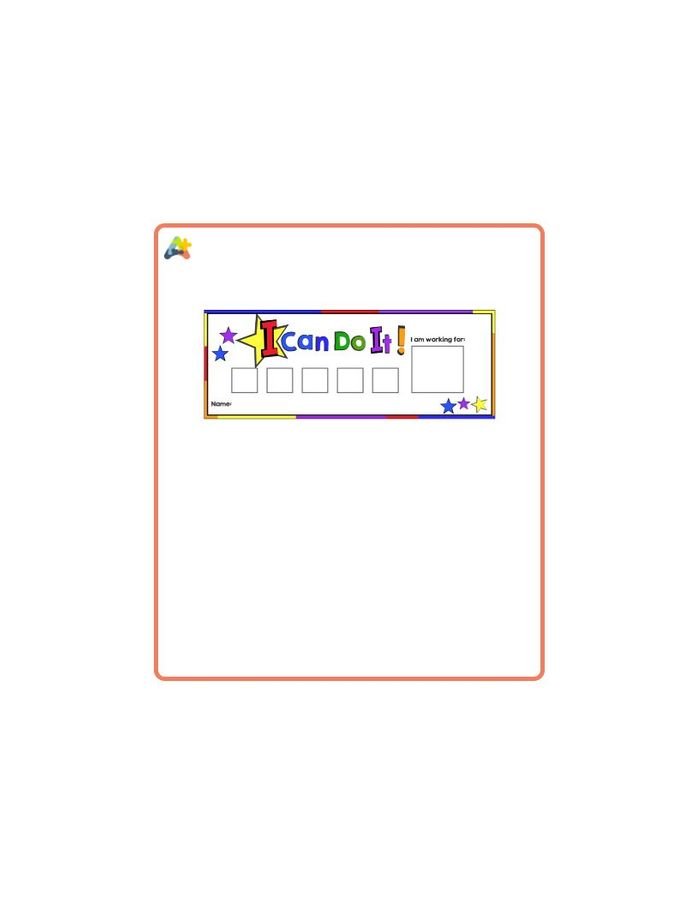
A token board is a behavior support system that reinforces positive behaviors by allowing learners to earn tokens, which are later exchanged for a preferred reinforcer. The board serves as a visual reminder of what the learner is working toward, how many tokens have been earned, and how many remain before accessing the reinforcer.
I Can Do It! PDF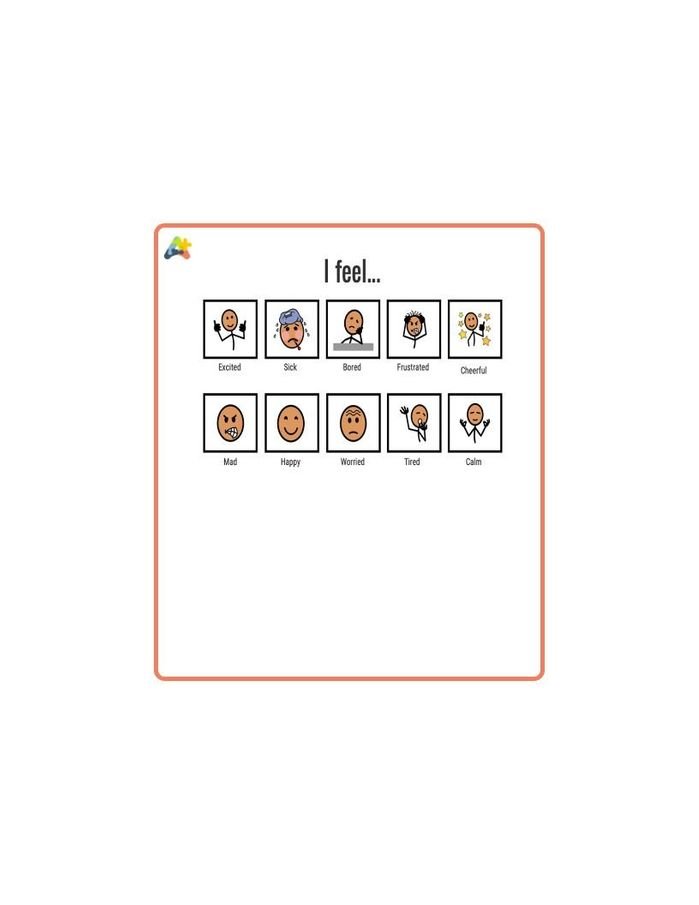
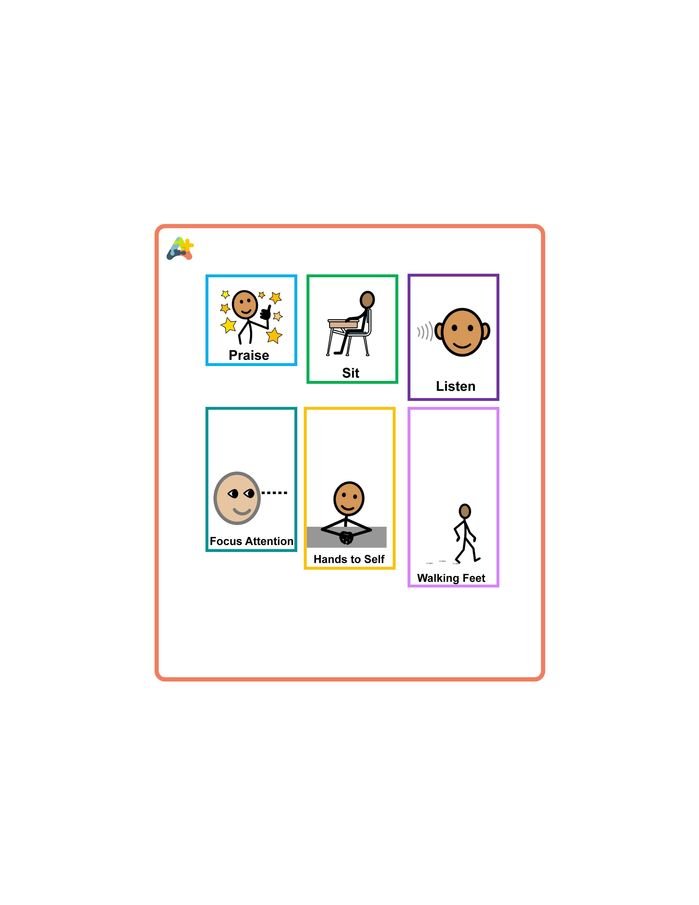
These visuals are designed to go onto staff lanyards. They allow staff to have quick and easy access to visuals in all areas in the school.
Lanyard Visual Page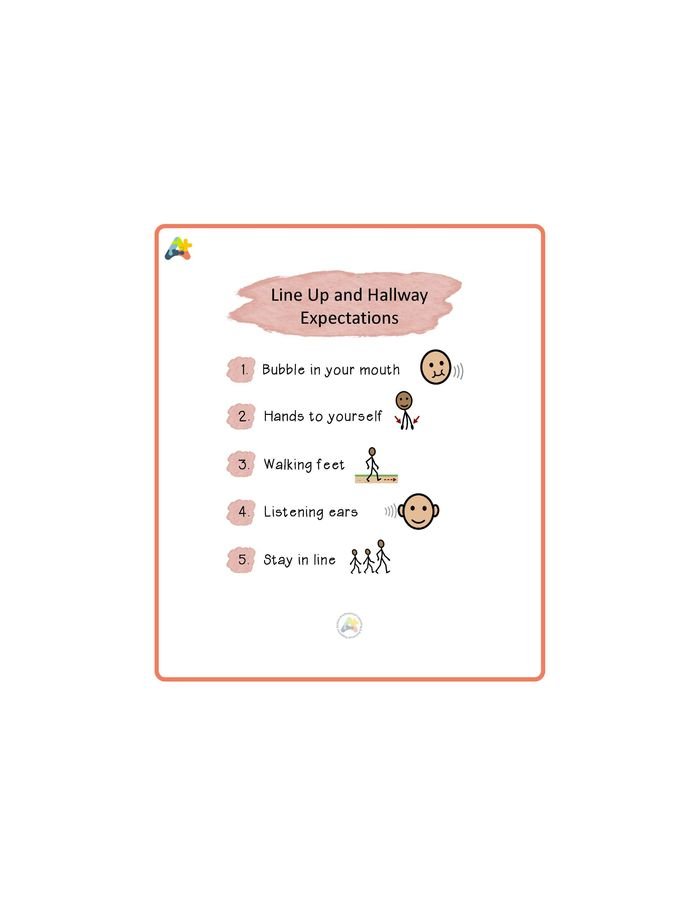
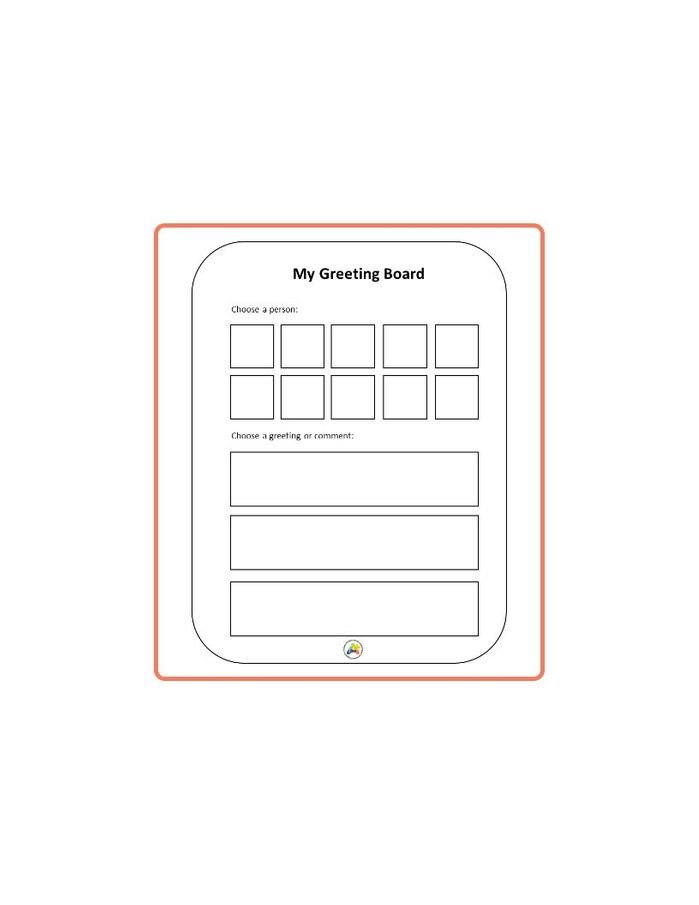
This greeting card provides options on who to speak to and what to say.
My Greeting Board Page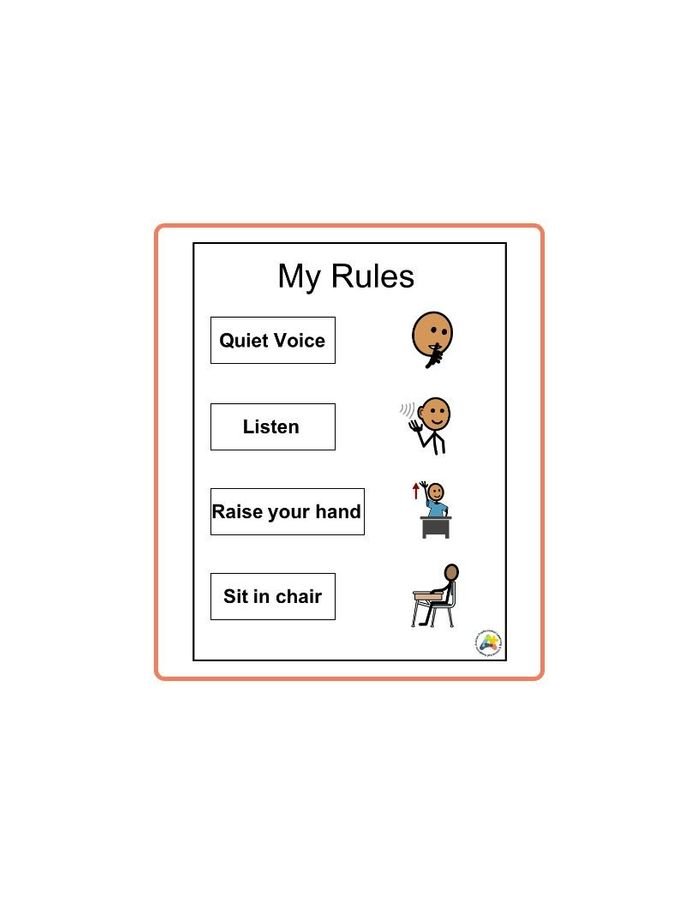
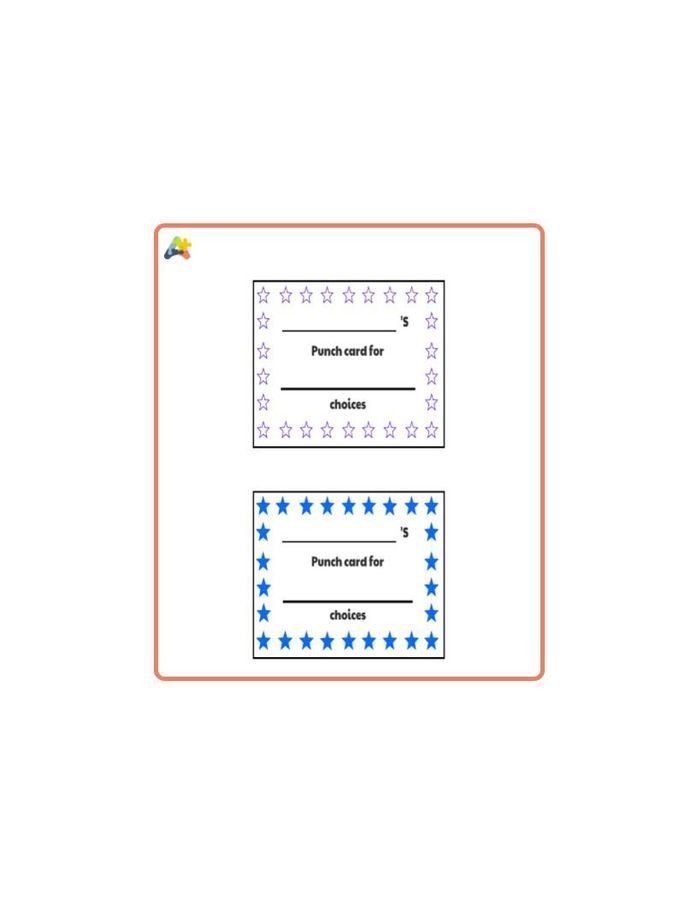
26 stars to punch out when the learner engages in positive behavior or a target behavior.
Punch Cards - Stars PDF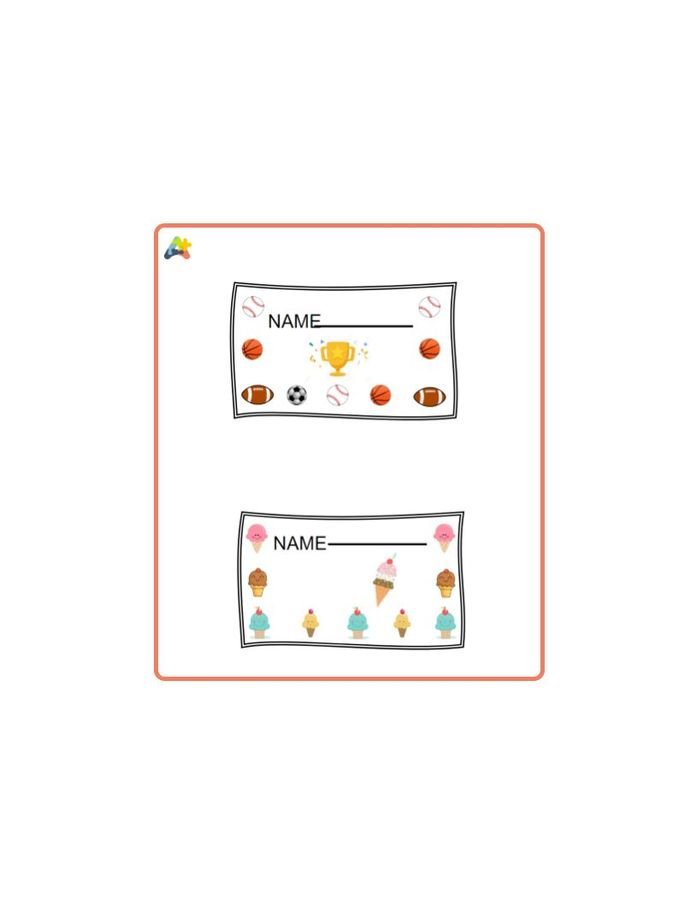
This document has a variety of punch cards, mainly for primary grades or a learner with a specific interest like Paw Patrol or sports.
Punch Cards - Variety PDF
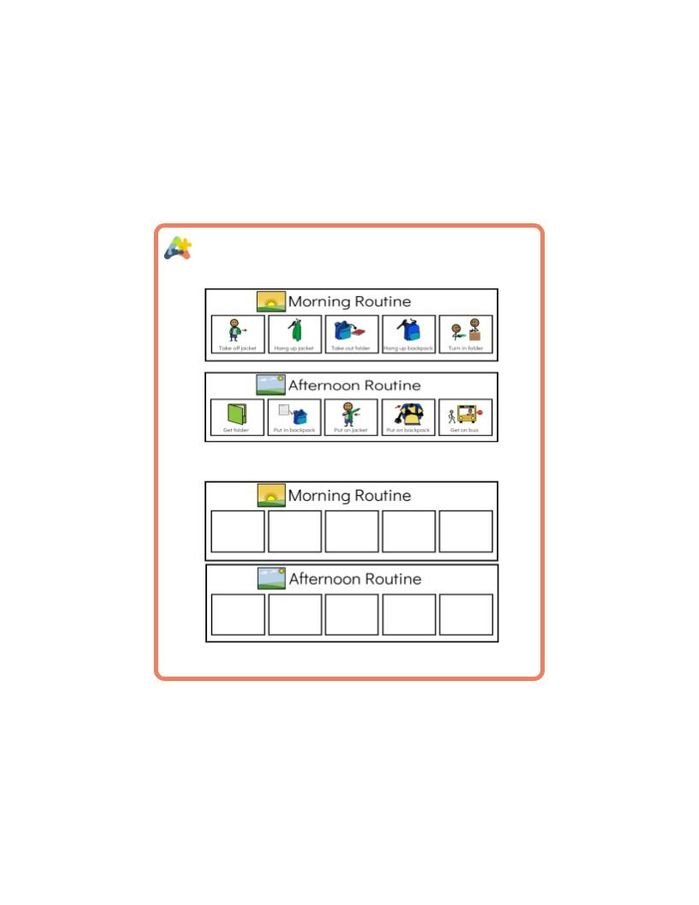
A visual to help learners understand what they are expected to do once they arrive in the classroom and their expectations for dismissal.
Schedule - AM/PM Mini PDF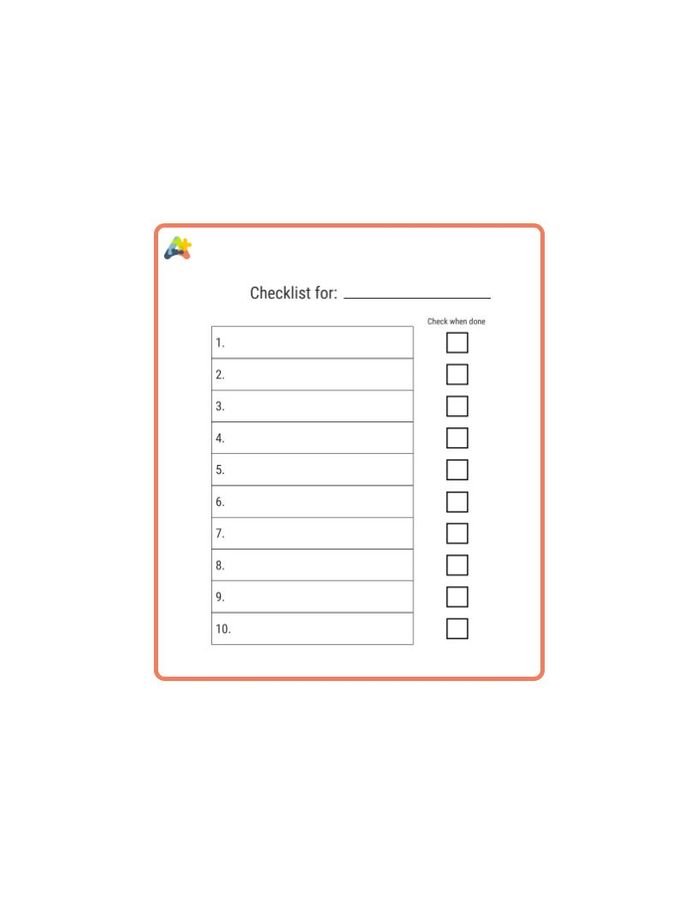
This schedule is in the form of a checklist and used for learner’s who have written schedules. Once they complete the task they can check it off and move on to the next task.
Schedule - Checklist (written) PDF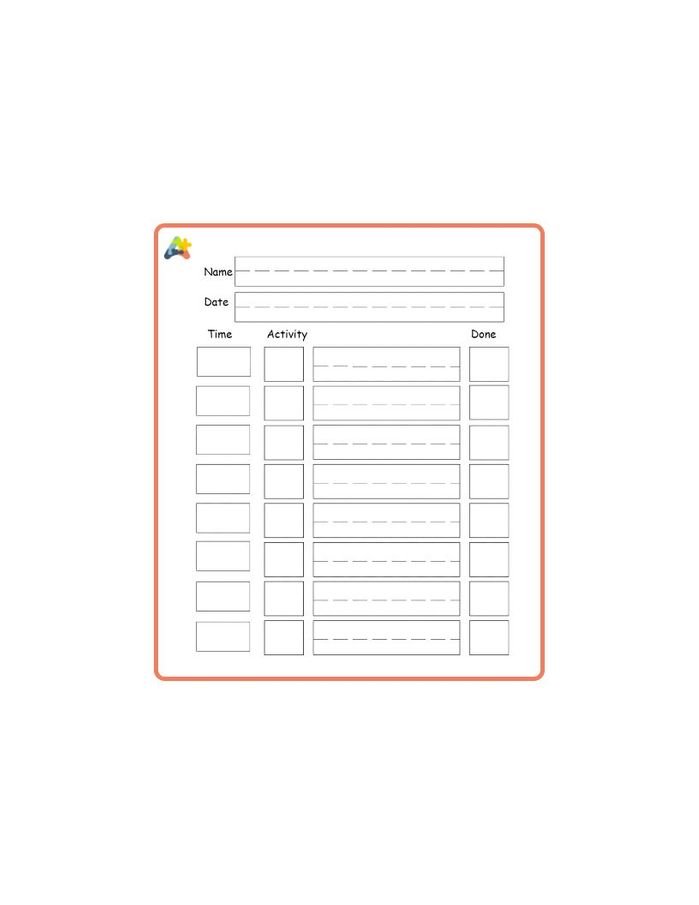
This schedule can include the time or a visual of the task. The student can write/copy/trace the schedule themselves.
Schedule - Daily Written PDF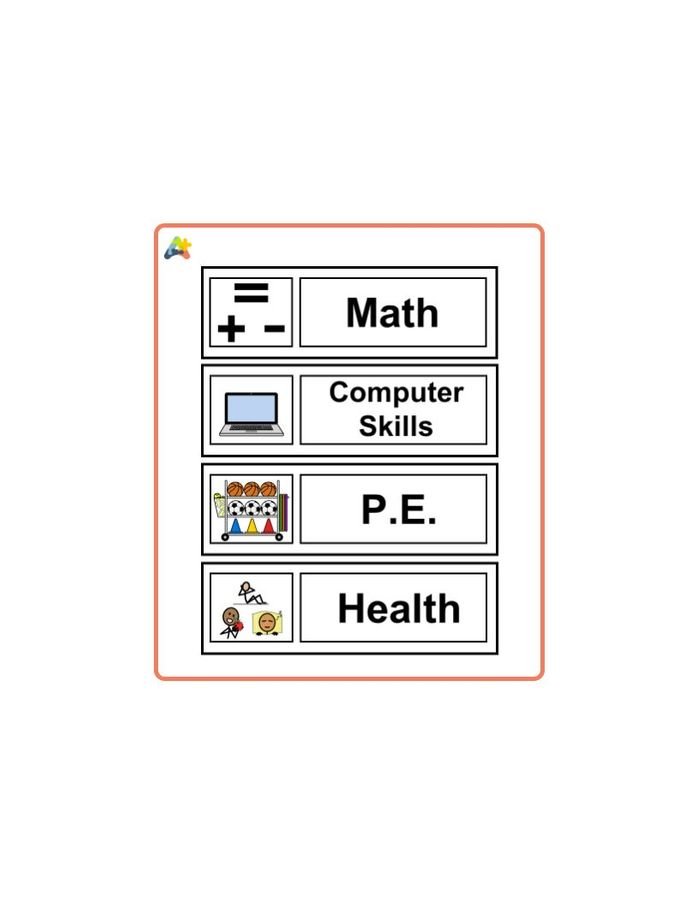
This schedule is to be used in front of the entire class. It is a group schedule that provides a visual and the word of each task/class.
Schedule - Group PDF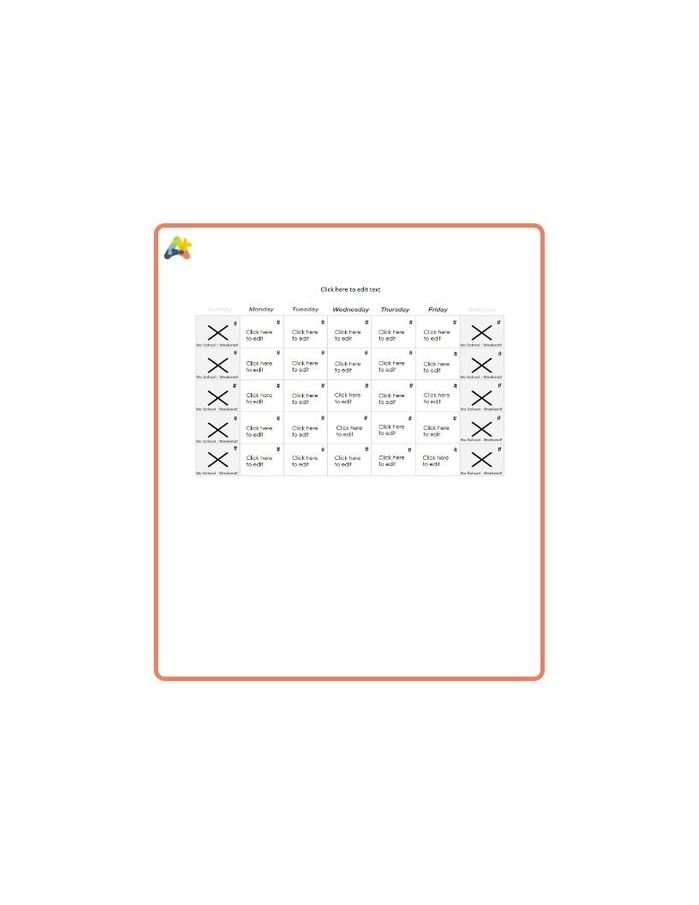
Monthly calendar to visually show learners events/plans/tasks that are coming up.
Schedule - Monthly Calendar PDF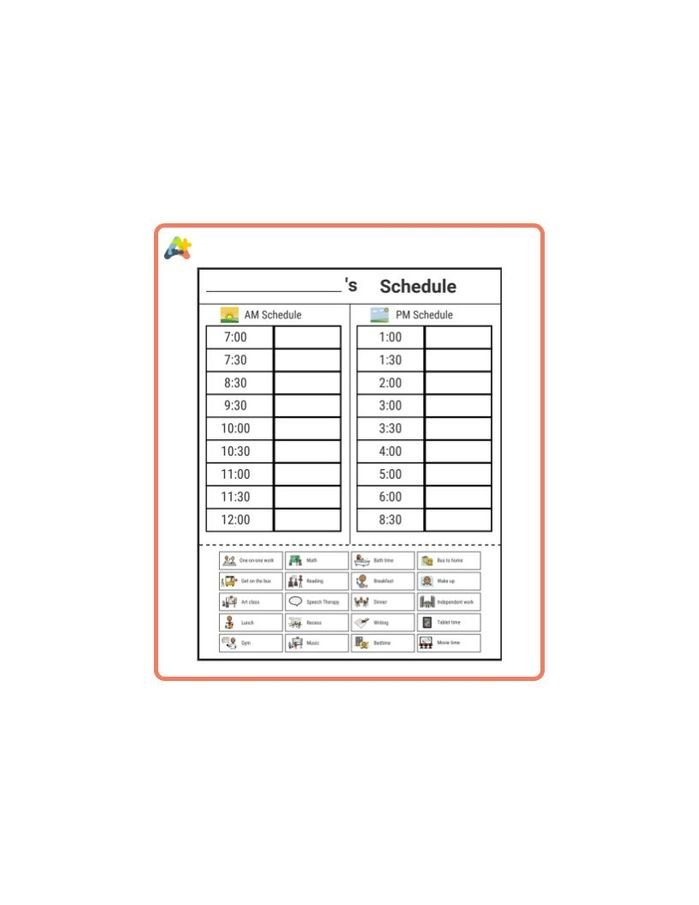
Use this schedule for learners who understand time. You can add a visual to this schedule for each task or use it as a written schedule.
Schedule - Morning/Afternoon With Time and Visuals PDF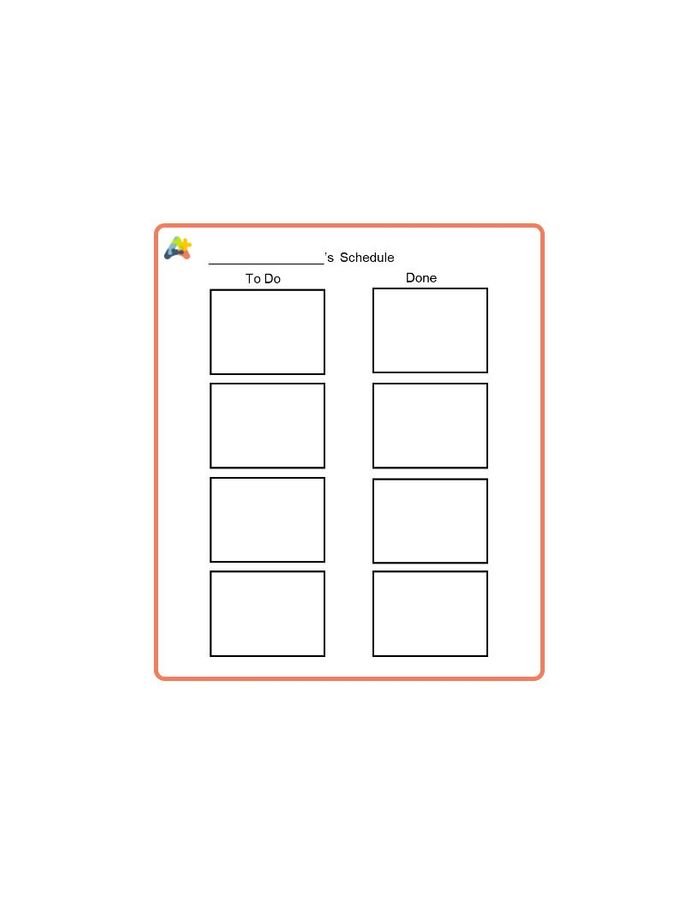
TOBI (True Object Based Icon) schedule is a transition between an object schedule and an icon schedule. Cut out the background/white of each picture when using a TOBI schedule.
Schedule - TOBI Page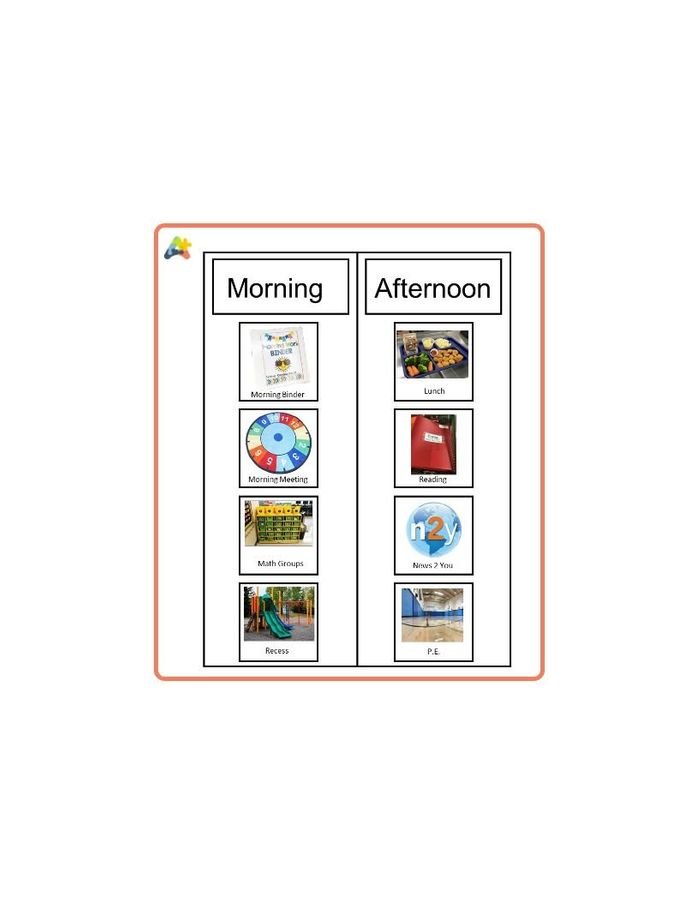
This visual schedule is broken down into morning and afternoon. It has space for 4 tasks each part of the day.
Schedule - Visual (4 spots) - Pictures PDF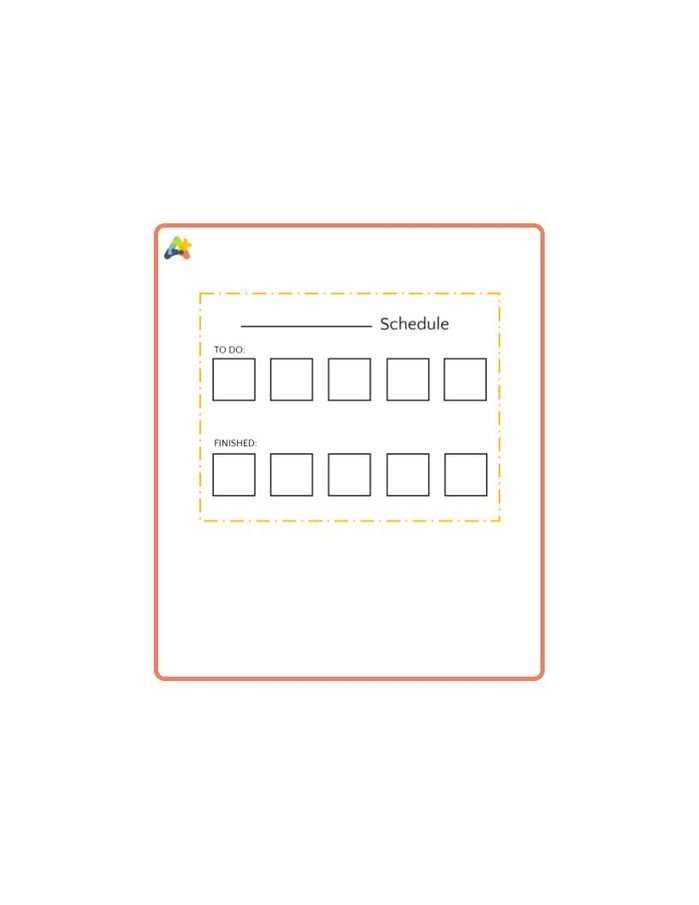
Use this schedule for learners' who need visuals (pictures or icons) to understand. You can manipulate the schedule to only show the morning tasks then change the schedule in the afternoon.
Schedule - Visual (5 spots) PDF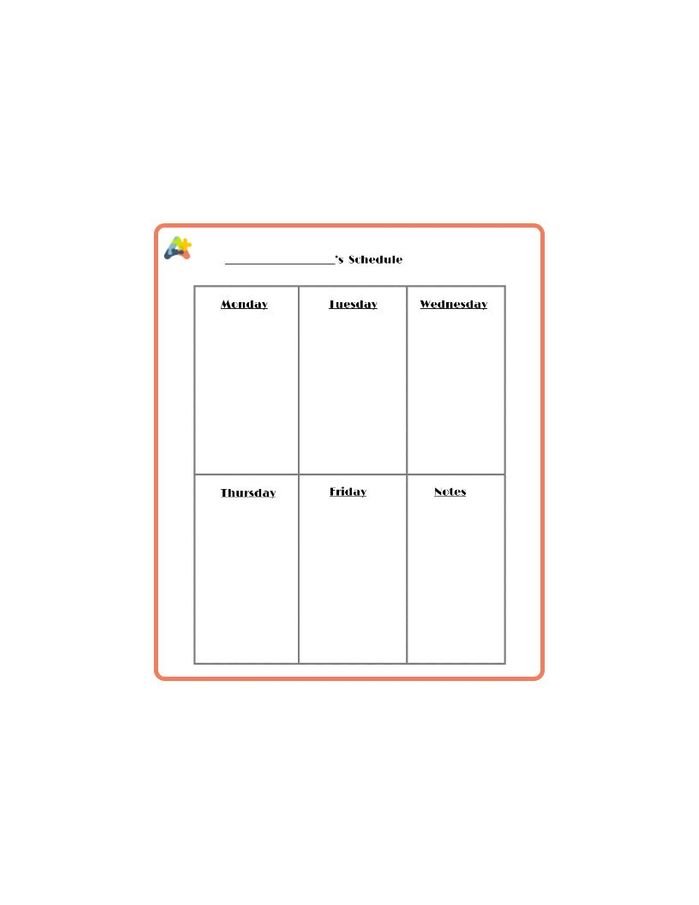
Write out the events/tasks/subjects for the week.
Schedule - Weekly Written PDF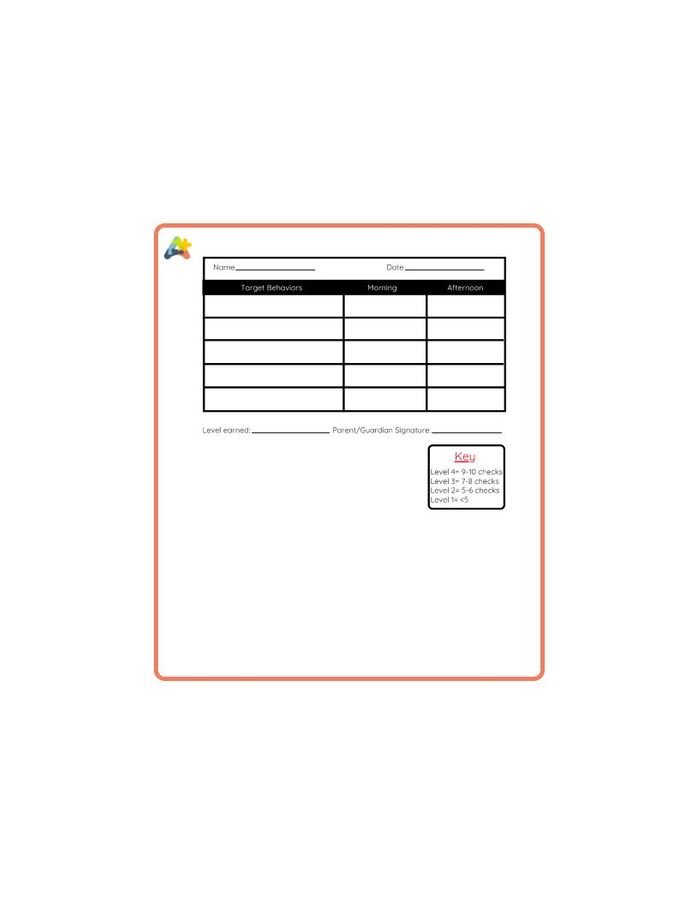
Self-monitoring behavior chart that allows the learner to reflect on their goals. The level earned is based on how many checks they received.
Self-Monitoring Point Sheet Page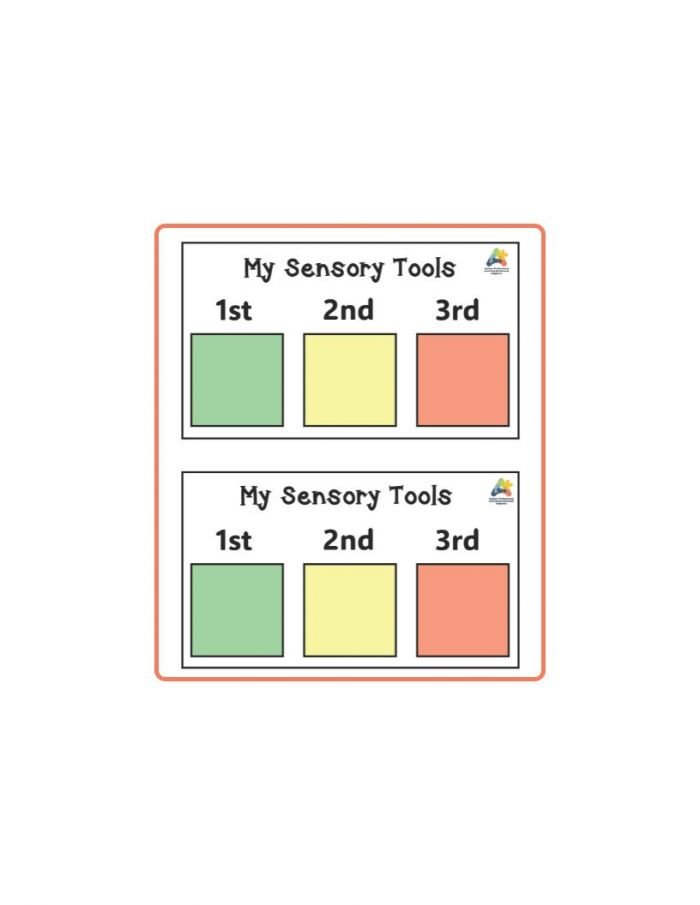
A sensory schedule is a structured and planned set of sensory activities embedded within a learner's daily routine. The schedule is designed to help maintain ideal levels of focus and emotional regulation throughout the day.
Sensory Schedule Page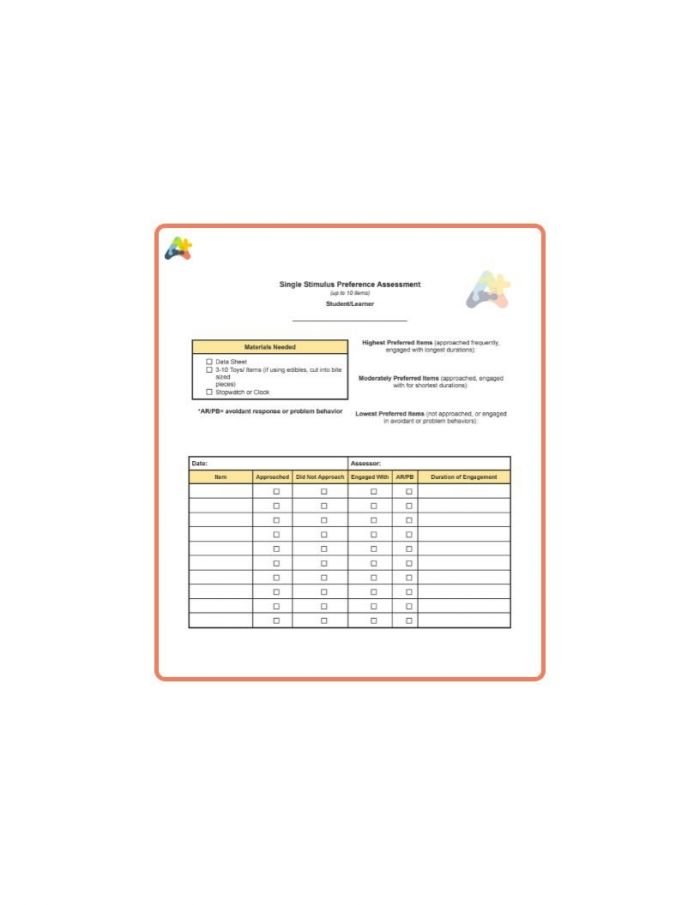
Preference assessments are evaluations that can be done through observations or are trial-based to determine a hierarchy of items that a learner might prefer. This resource provides data tables for a Single Stimulus Preference Assessment for up to 3 separate sessions.
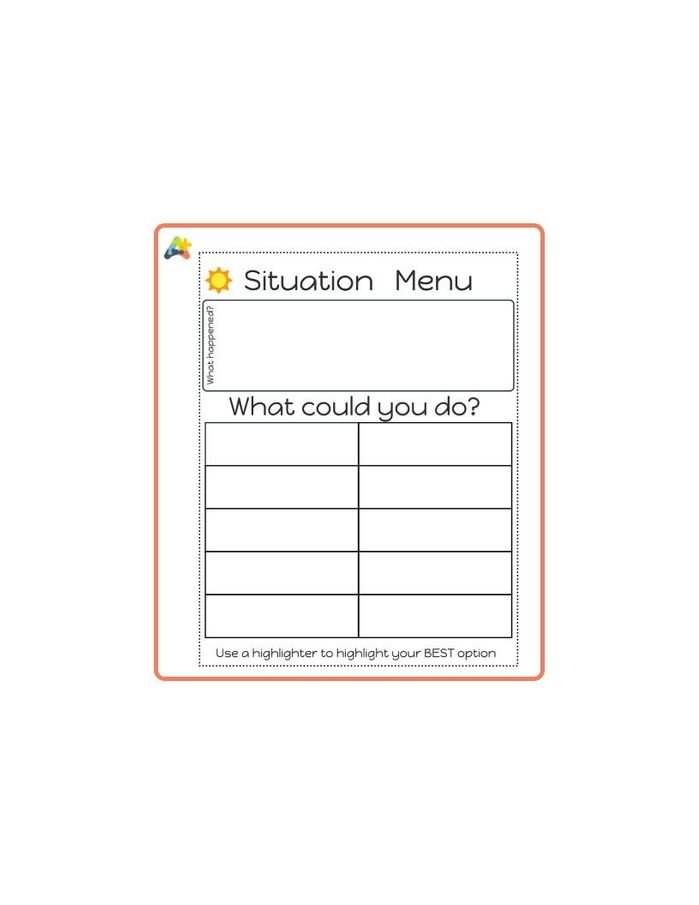
Problem solving a situation and choosing the most appropriate response.
Situation Menu PDF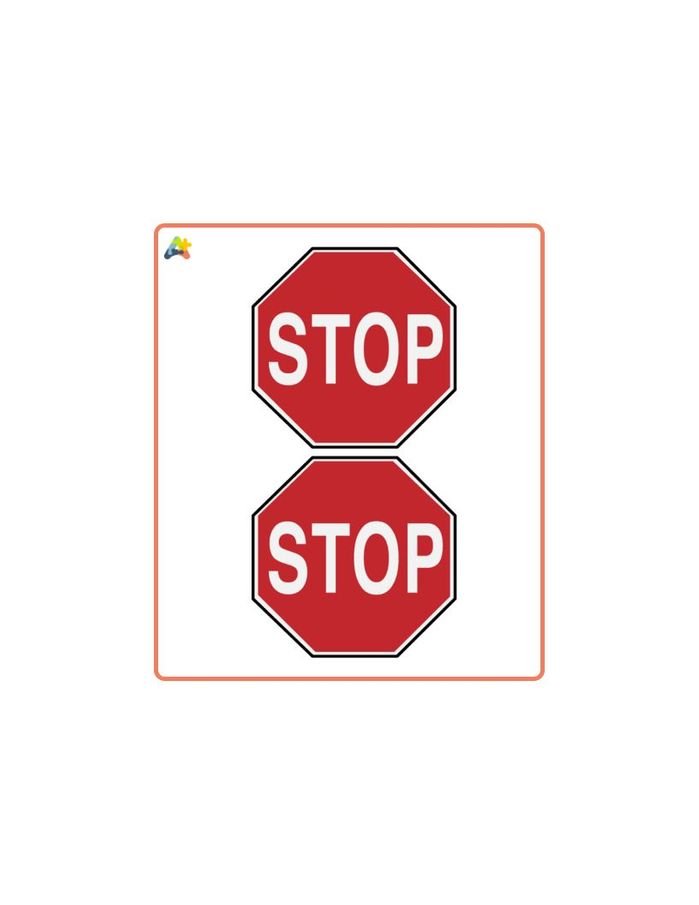
Stop sign visuals can be placed on doors or spaces students need to ask permission to go to or are not allowed.
Stop Sign Visual Page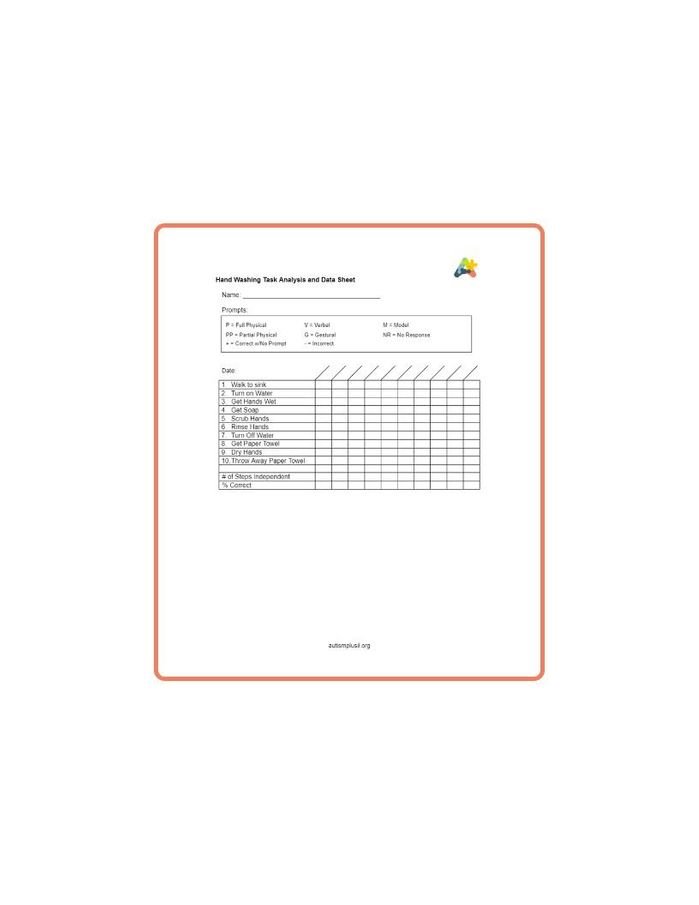
This document is used to learn what steps a learner is missing while completing the entire handwashing task.
Task Analysis - Hand Washing Page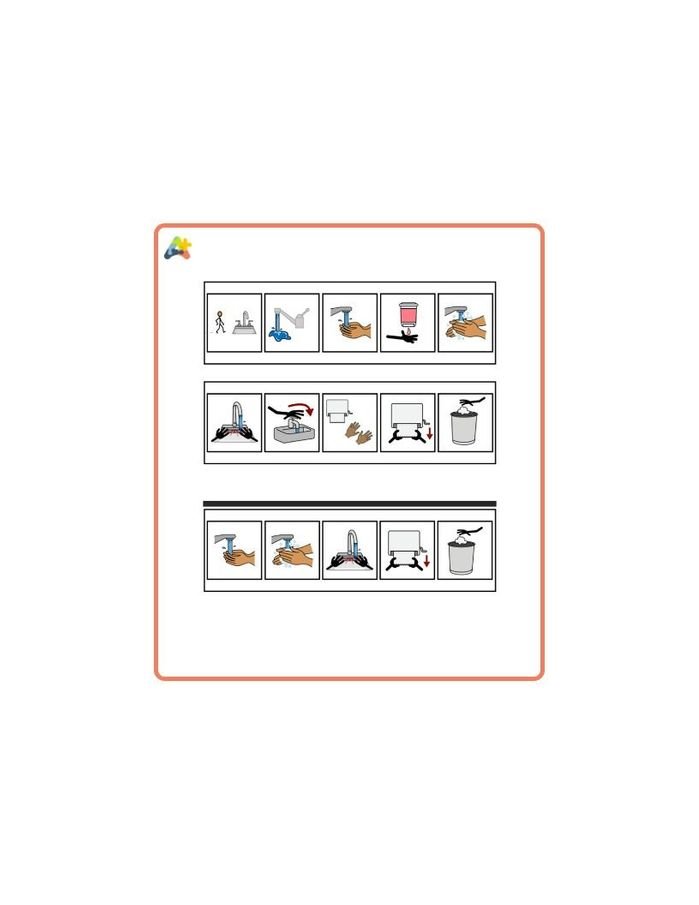
Track your learner’s ability to wash their hands. Are they missing any steps?
Task Analysis - Hand Washing Page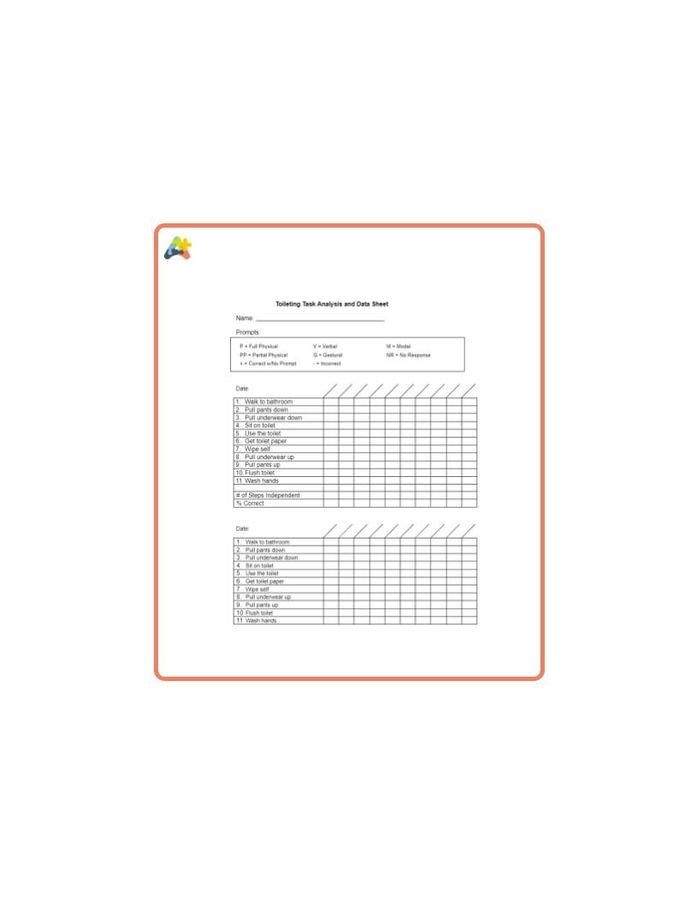
This data sheet helps staff know what steps the learner does not know while toileting. Continue to collect data to see progress from the learner.
Task Analysis - Toileting Page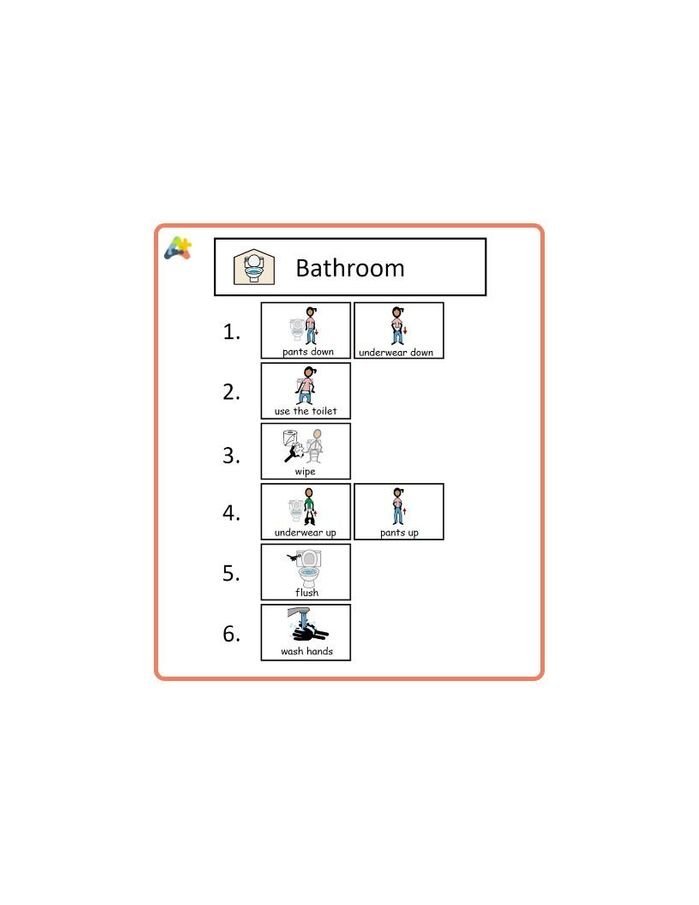
This data sheet is used to collect information on how the learner completes the task.
Task Analysis - Bathroom Page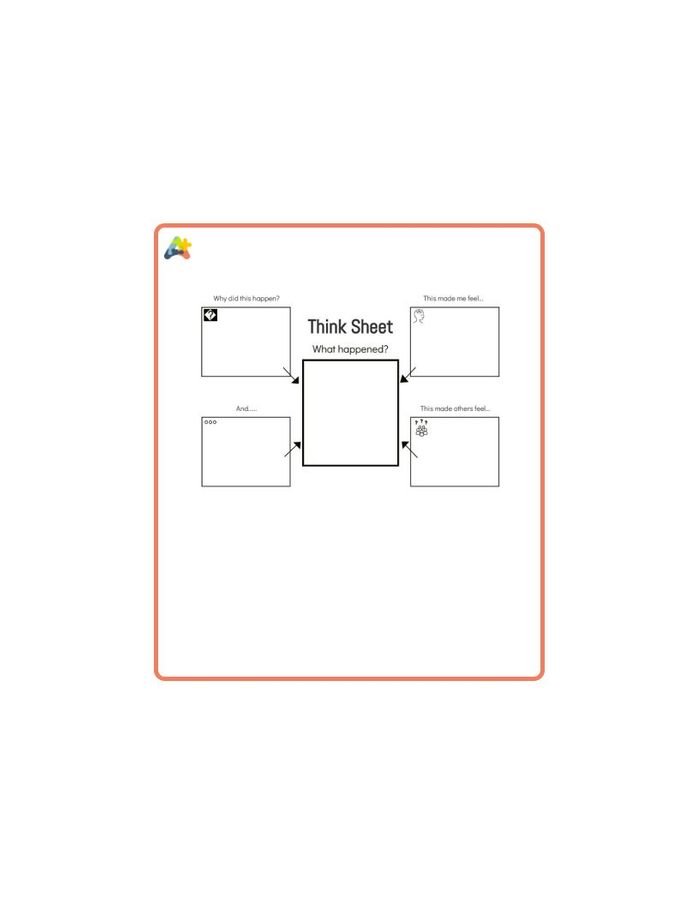
This resource allows the learner to break down what happened, how it made them feel, how it made others feel and why it happened.
Think Sheet PDF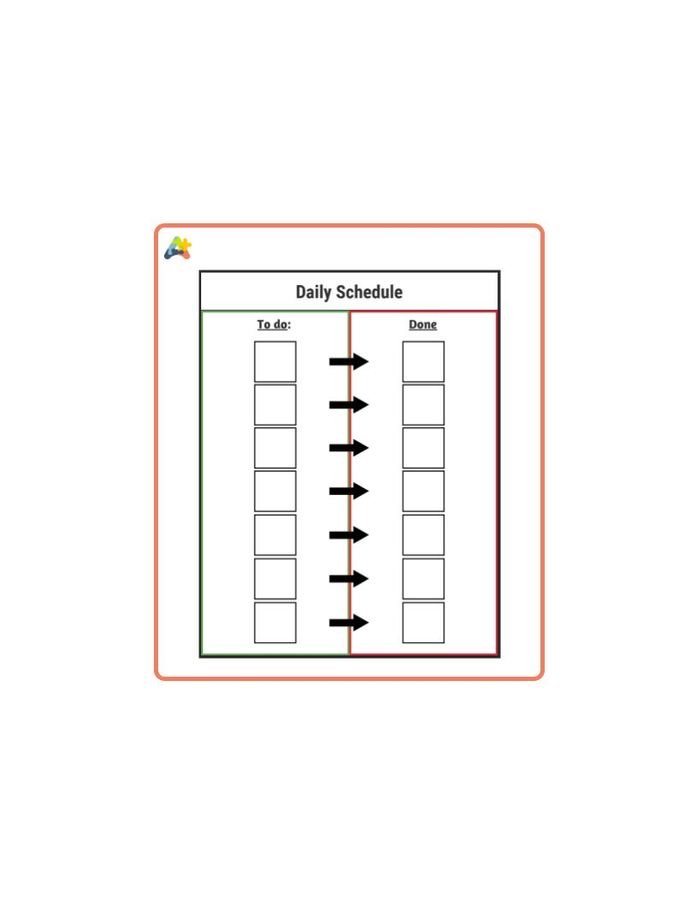
This schedule has 7 spots for To Do tasks. Once a task is complete the learner then moves it to the ‘Done’ section.
To Do (Green and Red Visual, 7 spots) PDF
A token board is a behavior support system that reinforces positive behaviors by allowing learners to earn tokens, which are later exchanged for a preferred reinforcer. The board serves as a visual reminder of what the learner is working toward, how many tokens have been earned, and how many remain before accessing the reinforcer. This one uses stars as the token.
Token Board - 10 Star Page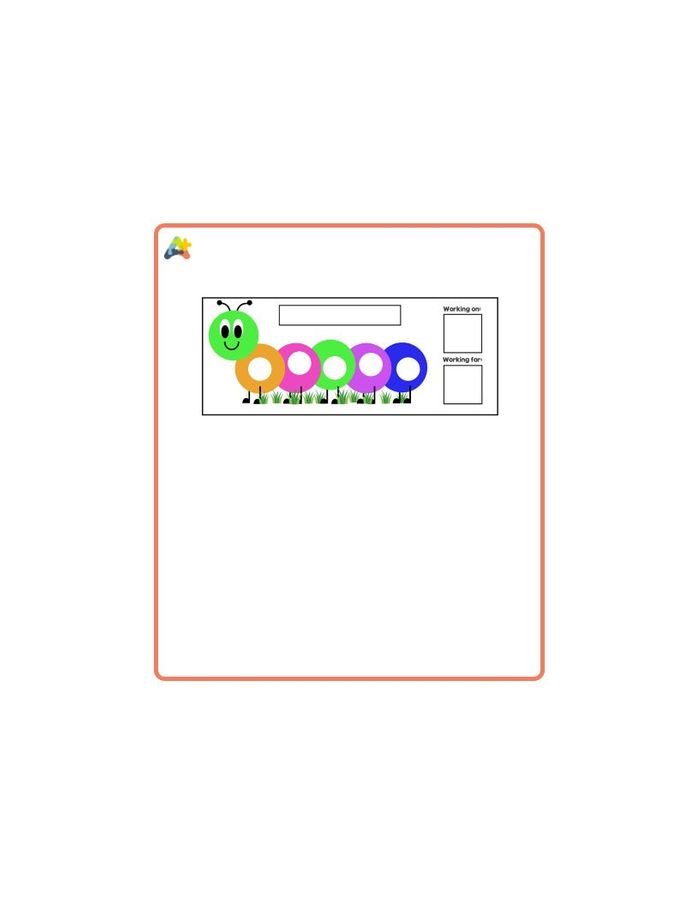
A token board is a behavior support system that reinforces positive behaviors by allowing learners to earn tokens, which are later exchanged for a preferred reinforcer. The board serves as a visual reminder of what the learner is working toward, how many tokens have been earned, and how many remain before accessing the reinforcer.
Token Board - Caterpillar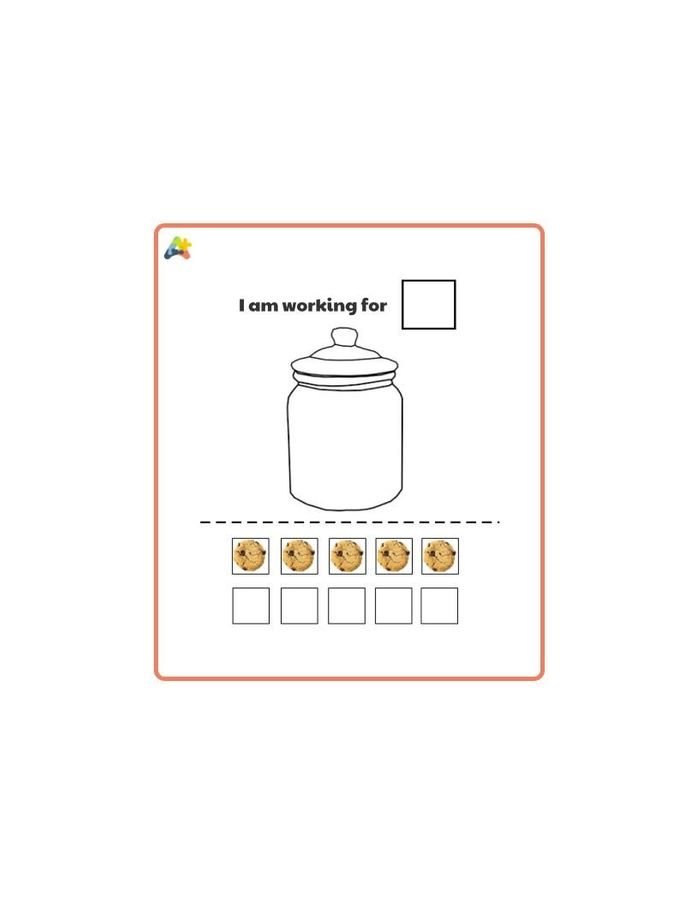
A token board is a behavior support system that reinforces positive behaviors by allowing learners to earn tokens, which are later exchanged for a preferred reinforcer. The board serves as a visual reminder of what the learner is working toward, how many tokens have been earned, and how many remain before accessing the reinforcer.
Token Board - Cookie Jar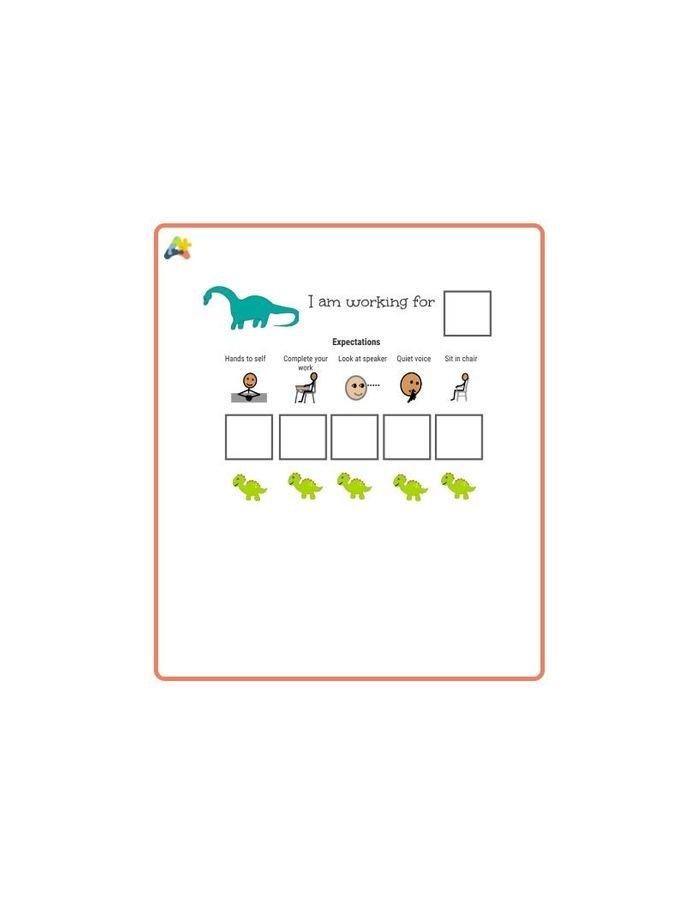
A token board is a behavior support system that reinforces positive behaviors by allowing learners to earn tokens, which are later exchanged for a preferred reinforcer. The board serves as a visual reminder of what the learner is working toward, how many tokens have been earned, and how many remain before accessing the reinforcer.
Token Board - Dinosaur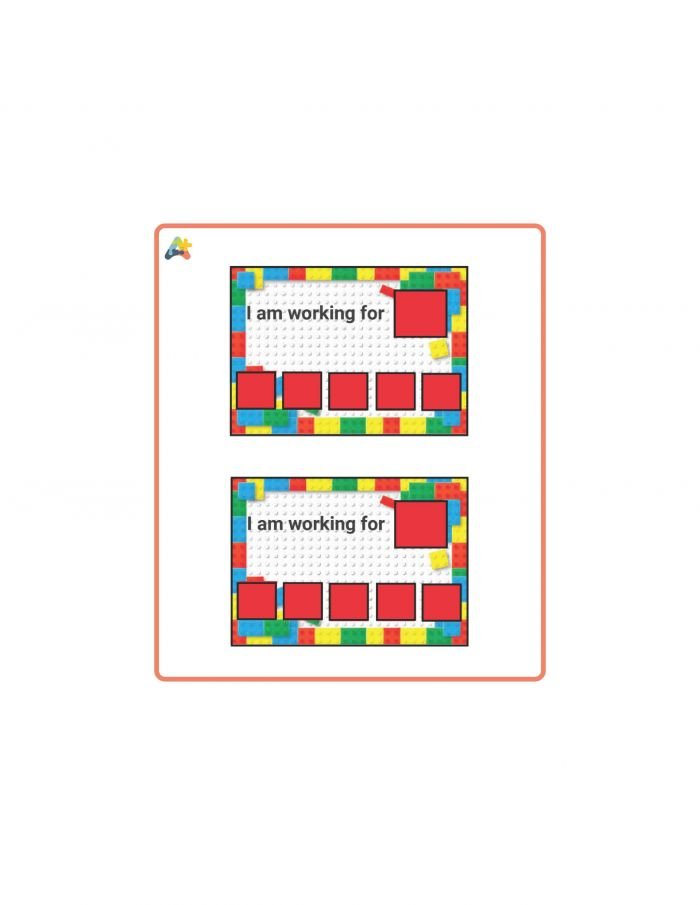
A token board is a behavior support system that reinforces positive behaviors by allowing learners to earn tokens, which are later exchanged for a preferred reinforcer. The board serves as a visual reminder of what the learner is working toward, how many tokens have been earned, and how many remain before accessing the reinforcer.
Token Board - Lego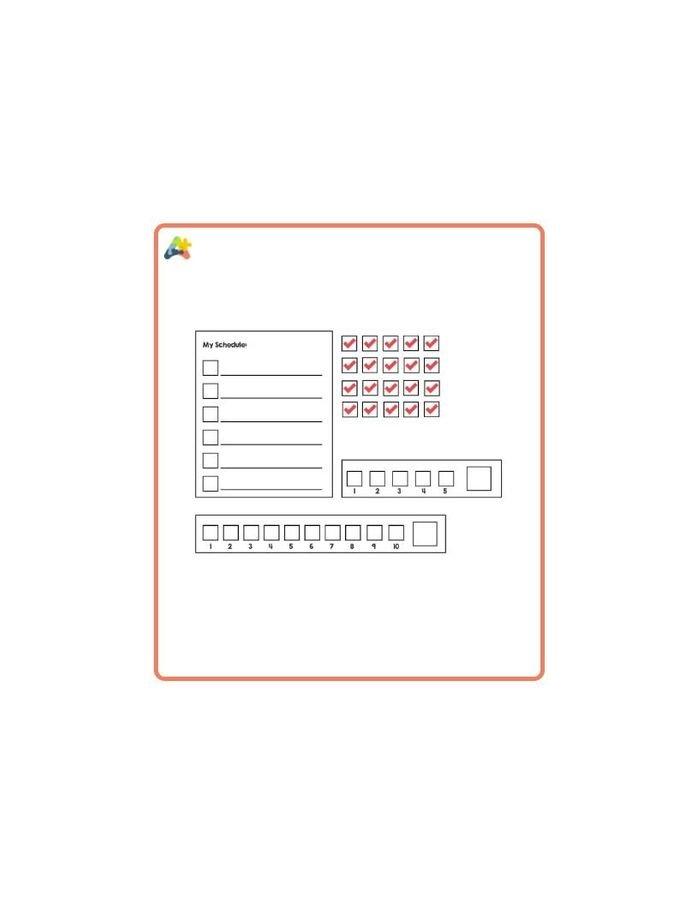
This written schedule has a checklist format and also utilizes a token board.
Token Board / Schedule PDF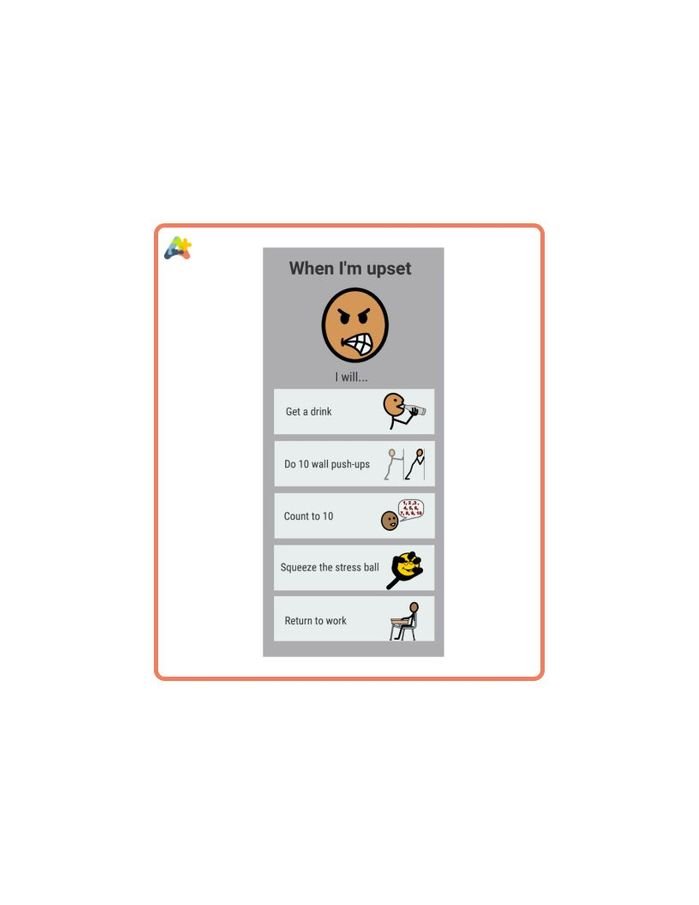
A reminder that displays appropriate ways to self-regulate when a learner is upset.
When I’m Upset… PDF
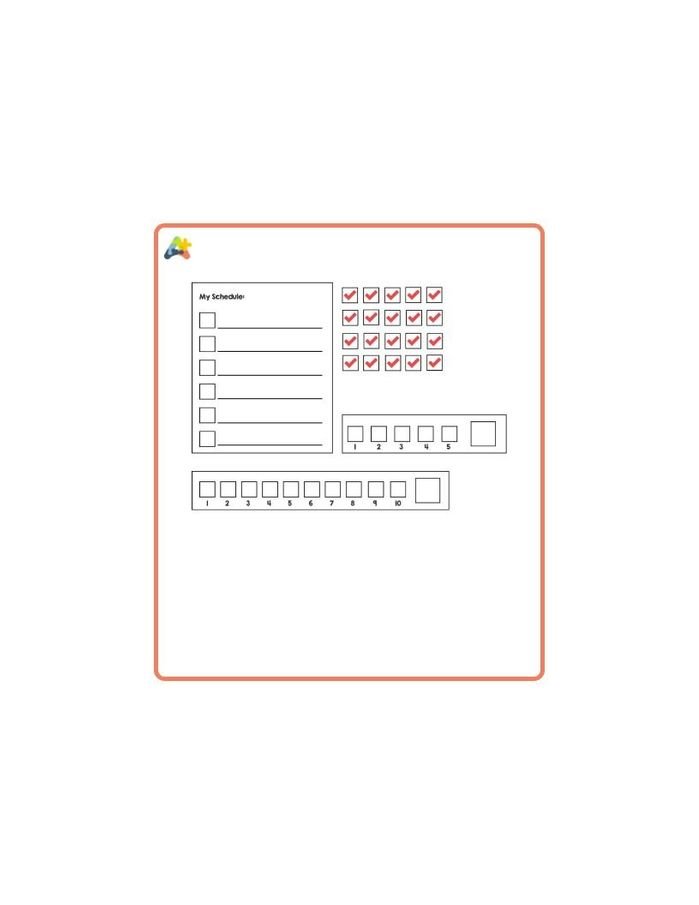
This written schedule has a checklist format and also utilizes a token board.
Written Schedule/Token Board PDF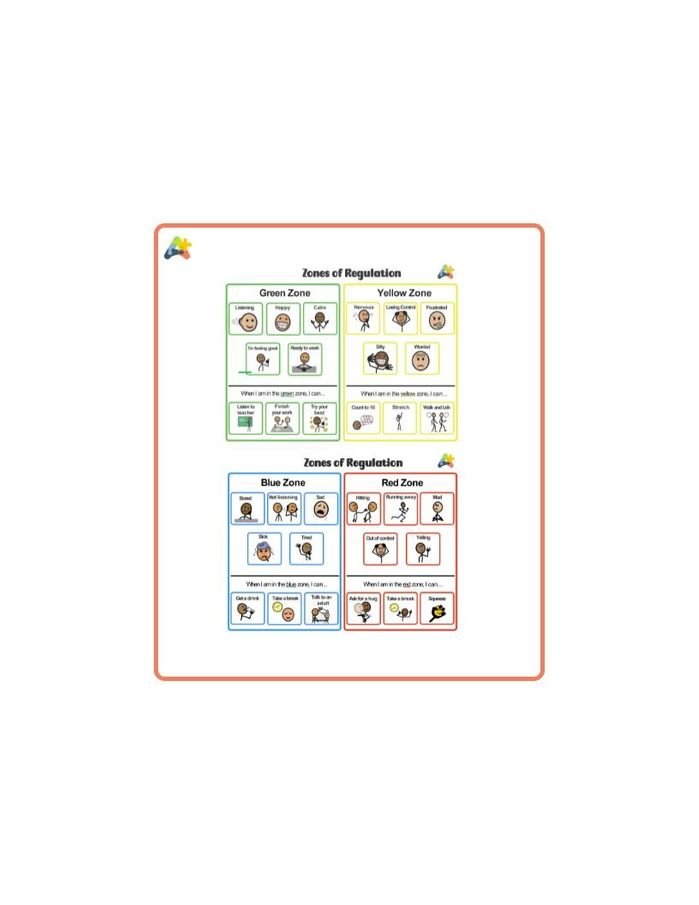
Zones of Regulation is a systematic, cognitive-behavioral approach to teach self-regulation and emotional control. It was designed to help individuals understand and manage their emotions and sensory needs effectively. The framework includes four color-coded ones based on emotion and states of alertness.
Zones of Regulation Page